Dental Implants With Bone Loss in Irvine, CA: Candidacy
Bone loss doesn't automatically rule out dental implants in Irvine. Learn which grafting options, evaluations, and financing paths make candidacy possible.

Yes — in most cases, you can still get dental implants in Irvine, CA even if you've been told you have bone loss. Modern grafting techniques, sinus lifts, and advanced imaging make it possible to rebuild the jaw structure needed to support an implant, and the majority of patients who were once turned away are now viable candidates. The real question isn't whether implants are possible, but which reconstructive path fits your specific anatomy, timeline, and budget.
If you've been quietly assuming bone loss disqualifies you, that assumption is likely out of date. Implantology in 2026 looks nothing like it did a decade ago, and the diagnostic tools available at practices like Rice Dentistry off Von Karman Avenue can map your bone in three dimensions before anyone touches a scalpel. Here's what you actually need to know.
Can you get dental implants with bone loss in Irvine, CA?
Yes. Bone loss is one of the most common findings during implant consultations, and it rarely ends the conversation. Between bone grafting, sinus lifts, ridge expansion, and newer techniques like zygomatic implants for severe cases, roughly 90% of patients with insufficient bone can be rebuilt to candidacy. The evaluation determines the technique, not the eligibility.
Why bone loss happens in the first place
Once a tooth is extracted or lost, the surrounding jawbone begins resorbing almost immediately — you can lose 25% of bone width in the first year alone. Periodontal disease accelerates this, as does long-term denture wear, which compresses the ridge without stimulating it. Trauma, infection, and certain medications also play a role.
The longer you wait after tooth loss, the more reconstruction your case tends to require. That's not a scare tactic; it's simple bone biology.
Am I a candidate for dental implants if grafting is required?
In most cases, yes. Needing a bone graft doesn't disqualify you from implants — it's often the first stage of getting them. Candidacy depends more on your overall health, gum condition, and ability to heal than on how much bone you currently have. Uncontrolled diabetes, active periodontal disease, and heavy smoking are bigger red flags than a thin ridge.
At Rice Dentistry, candidacy evaluations start with a cone-beam CT scan (CBCT), which produces a three-dimensional view of your jaw down to the millimeter. That imaging tells us whether you need a minor graft, a sinus lift, or a staged reconstruction — and it removes the guesswork that used to lead to failed implants.
The health factors that matter most
- Controlled systemic conditions: Diabetes and osteoporosis aren't automatic disqualifiers if well-managed.
- Gum health: Active periodontal disease must be treated before implant placement.
- Smoking status: Smokers face implant failure rates two to three times higher; cessation dramatically improves outcomes.
- Bite forces: Grinding and clenching need to be addressed with a nightguard to protect the investment.
What bone grafting options are available in Irvine, CA?
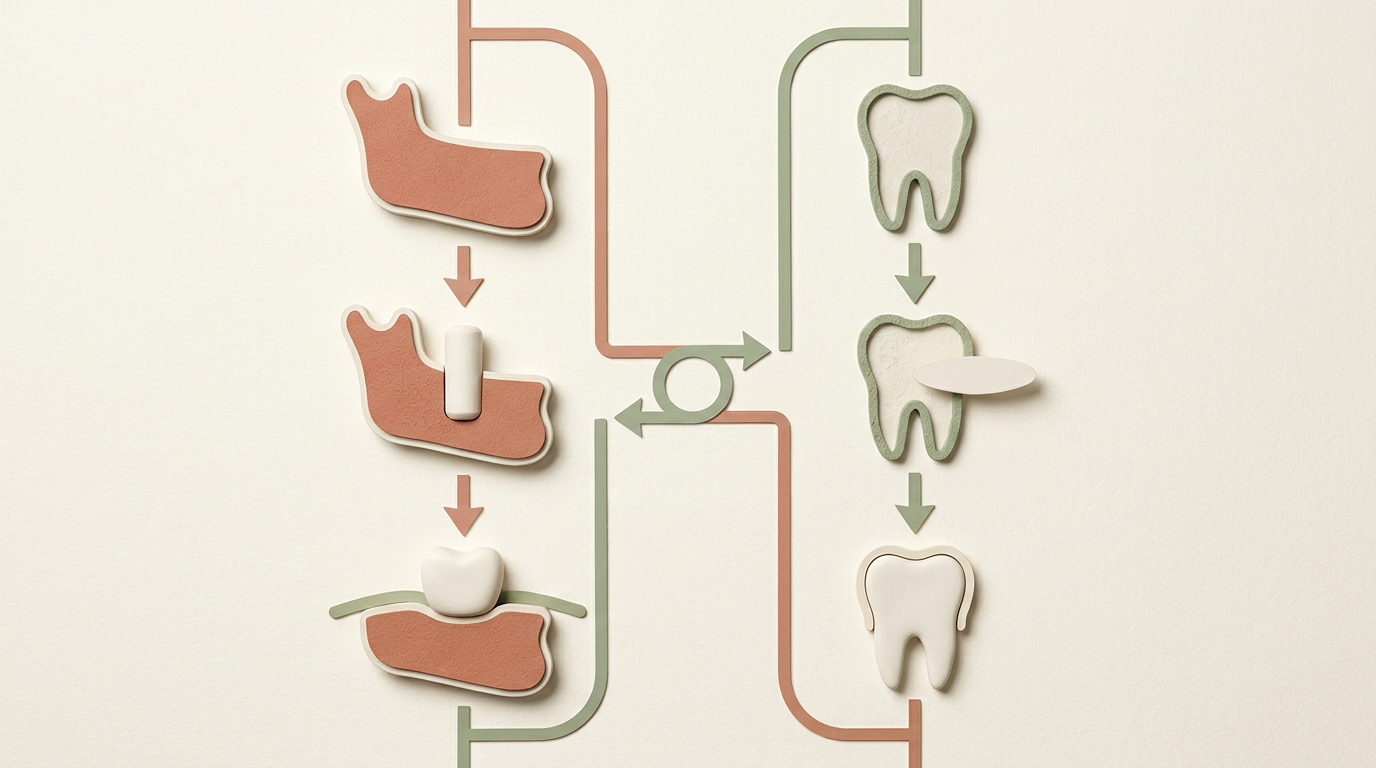
Irvine patients typically have four grafting paths available: socket preservation grafts placed at extraction, ridge augmentation for width or height deficits, sinus lifts for upper back teeth, and block grafts for severe loss. The right option depends on which part of the jaw is affected and how much bone must be regenerated. Most grafts heal in four to six months before implant placement.
| Procedure | Best For | Healing Time | Typical Cost Range |
|---|---|---|---|
| Socket Preservation | Prevention at extraction | 3–4 months | $400–$1,200 |
| Ridge Augmentation | Width/height loss | 4–6 months | $1,500–$3,500 |
| Sinus Lift | Upper back molars | 6–9 months | $2,000–$5,000 |
| Block Graft | Severe loss | 6–9 months | $3,000–$6,000 |
| Zygomatic Implants | Extreme upper jaw loss | Same-day loading possible | $15,000–$30,000+ |
Ranges reflect typical Orange County fees for planning purposes; your actual quote depends on imaging, materials (autograft, allograft, xenograft, or synthetic), and whether procedures are staged or combined.
How does the evaluation process work at Rice Dentistry?
The evaluation begins with a full clinical exam, a CBCT scan, and a review of your medical history and goals. From there, we build a written treatment plan showing exactly which grafting (if any) is needed, the implant timeline, and the total investment before you commit to anything. No surgery is scheduled until you understand every stage.
Rice Dentistry sits near the Irvine Business Complex, which makes it accessible to patients from Woodbridge, Turtle Rock, Northwood, and the University of California, Irvine community. Consultations at our office typically run 60 to 90 minutes — long enough to answer the questions people usually leave a rushed visit still wondering about.
What the imaging reveals
A CBCT scan shows nerve pathways, sinus floors, and bone density in a way traditional X-rays simply cannot. That precision is what allows implant placement in cases that would have been declared impossible even fifteen years ago. It's also how we identify which patients genuinely need advanced reconstruction versus a straightforward implant.
What are dental implant financing options near me in Irvine?
Financing for implants in Irvine typically comes through three channels: in-house payment plans, third-party medical financing (CareCredit, LendingClub, Sunbit), and HSA/FSA accounts, which cover implants as qualified medical expenses. Many California PPO dental plans also contribute toward the crown portion or bone grafting when medically necessary, even when they exclude the implant fixture itself.
Because a full implant case with grafting can range from $4,500 to $30,000+, most Irvine patients use some combination of these tools. Rice Dentistry's team walks patients through insurance verification and financing pre-approval during the treatment planning phase, so the financial picture is clear before treatment starts.
How long does the full timeline take with bone loss?
Expect six to twelve months from first graft to final crown for most staged cases, and up to eighteen months for complex full-arch reconstructions. Simple socket preservation followed by implant placement can finish in six to eight months. Same-day implants exist for select cases but usually require adequate existing bone or zygomatic anchoring.
Why Irvine patients choose local specialists for complex cases
Southern California's dry, mild climate makes post-surgical healing predictable, and the density of specialists in Orange County means follow-up care is rarely more than a short drive from home. Rice Dentistry holds a 5-star rating across 573 Google reviews, with patients frequently citing calm handling of dental anxiety — one recent reviewer described being "cared for by such competent, caring people" during a complex crown and infection case.
For patients who've delayed treatment out of fear that bone loss ruled them out, that combination — advanced imaging, staged planning, and a team accustomed to anxious patients — often turns out to matter as much as the surgical technique itself.
Frequently Asked Questions
Can I get implants if I've worn dentures for 20 years?
Yes, though long-term denture wear typically causes significant ridge resorption that requires grafting or, in advanced cases, zygomatic implants. A CBCT scan will show exactly how much bone remains. Many long-term denture wearers in Irvine successfully transition to implant-supported dentures (All-on-4 or All-on-6), which restore both function and facial structure that dentures alone cannot preserve.
How much bone loss is too much for implants?
There's no universal threshold — even patients with severe atrophy can qualify through advanced grafting or zygomatic implants that anchor into the cheekbone. What matters is whether stable, vascularized bone can be built or accessed at the implant site. A 3D CBCT evaluation is the only reliable way to know your specific situation; visual exams and 2D X-rays consistently underestimate what's possible.
Does insurance cover bone grafting for implants in California?
Coverage varies by plan, but many California PPO dental insurance plans cover bone grafting when it's classified as medically necessary — particularly after extractions or trauma. The implant fixture itself is often excluded, though the crown restoration may be partially covered. Verify benefits before treatment; a good practice will run this pre-authorization for you rather than leaving it to guesswork.
How painful is bone graft surgery?
Most patients report the discomfort is closer to a routine extraction than to major surgery, and it's managed with local anesthesia, optional sedation, and standard post-op medication. Swelling peaks around day two or three and resolves within a week. Sedation dentistry is available for patients with dental anxiety, which makes even multi-stage grafting procedures comfortable to sit through.
Can I get same-day implants with bone loss?
Sometimes. Same-day or immediate-load implants require enough existing bone for primary stability, so patients with mild-to-moderate loss may qualify while those with severe atrophy usually cannot. Zygomatic implants are an exception — they bypass the upper jaw entirely and can be loaded the same day. A CBCT scan and clinical exam are the only way to confirm which category you fall into.
What happens if I don't replace missing teeth?
Bone loss accelerates, adjacent teeth shift into the gap, the opposing tooth over-erupts, and facial structure begins to change as the jaw resorbs. Chewing efficiency drops, and remaining teeth take on forces they weren't designed to handle, often leading to fractures. The longer replacement is delayed, the more reconstructive work becomes necessary — which is why early evaluation almost always saves money long-term.
The bottom line for Irvine patients with bone loss
Bone loss is a solvable problem, not a stopping point. The technology to rebuild jaw structure and place implants successfully exists, is accessible in Irvine, and works reliably for the vast majority of patients who commit to the process. What separates good outcomes from disappointing ones is the quality of the initial evaluation and the honesty of the treatment plan.
Readers in Irvine, CA who want a straightforward assessment of what's actually possible for their case can reach Rice Dentistry at https://irvinedentalcare.com to schedule a consultation and CBCT evaluation. Bring your questions — the ones you've been holding onto because you assumed the answer was no.