Implants and Veneers Same Dentist in Irvine, CA: Worth It?
How combining dental implants and veneers in one Irvine office actually works — sequencing, planning, and what to ask before you commit.
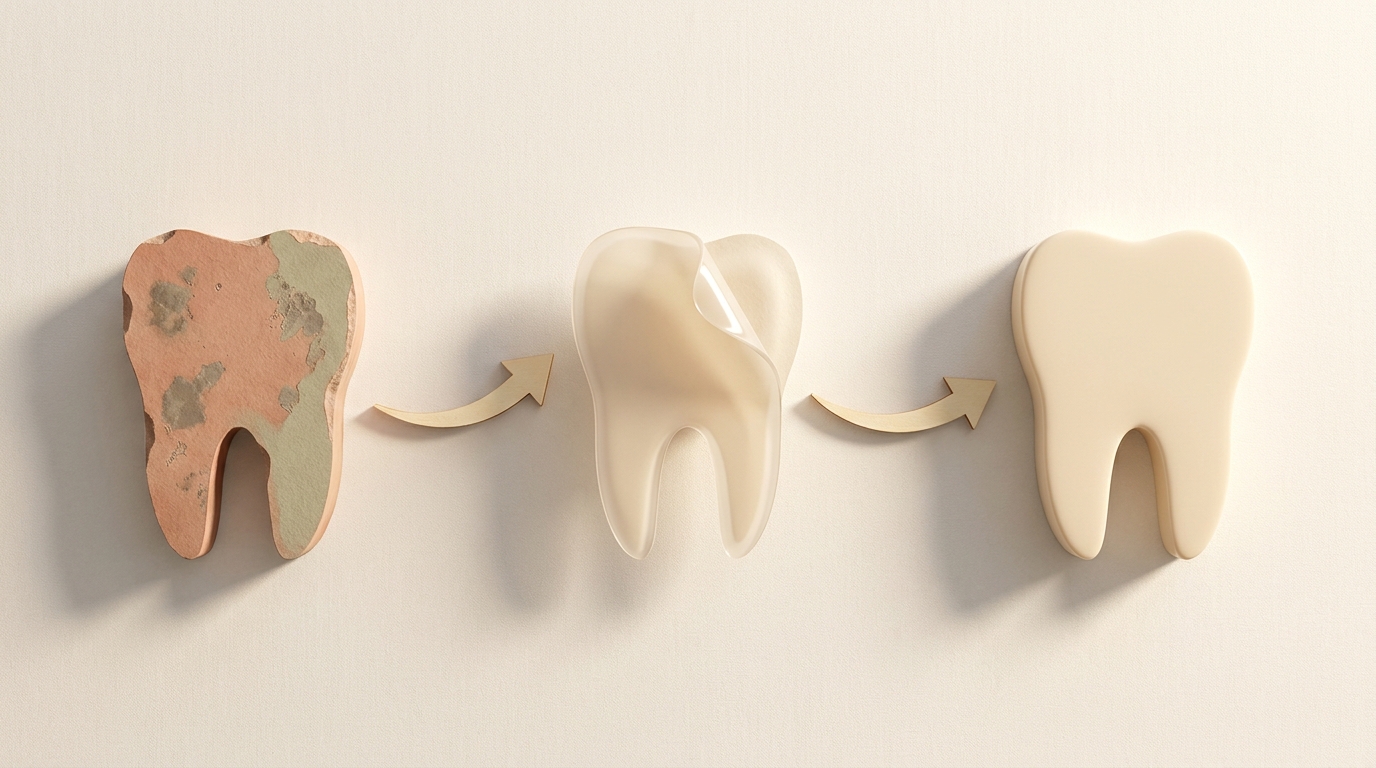
Yes — a single Irvine dental office can plan and deliver both dental implants and veneers, and in most cases coordinating them under one roof produces a cleaner result than splitting the work across practices. The catch is that implants and veneers run on different clinical clocks, so the value of "one office" only materializes when the sequencing, bite, and color are mapped out before any drilling starts.
What does it actually mean to get implants and veneers at the same dentist in Irvine?
It means one clinical team owns the full plan: the surgical placement of the implant into the jawbone, the healing period, the final implant crown, and the veneers bonded to your other front teeth. One office keeps your bite records, shade selections, and imaging data in a single chart, so the implant crown and the veneers are designed to match each other rather than negotiated across two practices.
Implants replace missing tooth roots and are restored with crowns, bridges, or dentures. Veneers are a separate, cosmetic treatment — thin coverings bonded to the front surface of existing teeth. Because they solve different problems, patients who need both are not choosing between them; they are sequencing them.
Why does combining implants and cosmetic work in one Irvine office matter clinically?
It matters because the implant crown and the surrounding veneers have to read as one smile. Shade, translucency, incisal edge position, and midline all have to be decided once and executed across every restoration — a handoff between two offices is where those details drift. A combined cosmetic and reconstructive practice such as Rice Dentistry in Irvine designs the implant restoration and the veneers from the same digital plan, which is why the practice offers both cosmetic services (porcelain veneers, hybrid veneers, BioClear, Invisalign) and reconstructive services (All-on-X, dental implants, full mouth reconstruction, crowns and bridges) under one roof.
There is also a diagnostic reason. Veneers cannot be placed over unhealthy teeth — a dentist must first treat decay or gum disease, because placing veneers over existing problems may worsen them. When the same team is also planning your implant, periodontal and restorative health are evaluated once, for the whole mouth, instead of being re-litigated at a second office.
How does the sequencing actually work under the hood?
Implants are placed first and veneers come last, because implants need months of integration before anything cosmetic locks in around them. Implant treatment commonly involves a healing period before the final implant restoration is placed; bone grafting, if required, extends that window. Veneers are designed around the final implant crown, not the temporary.
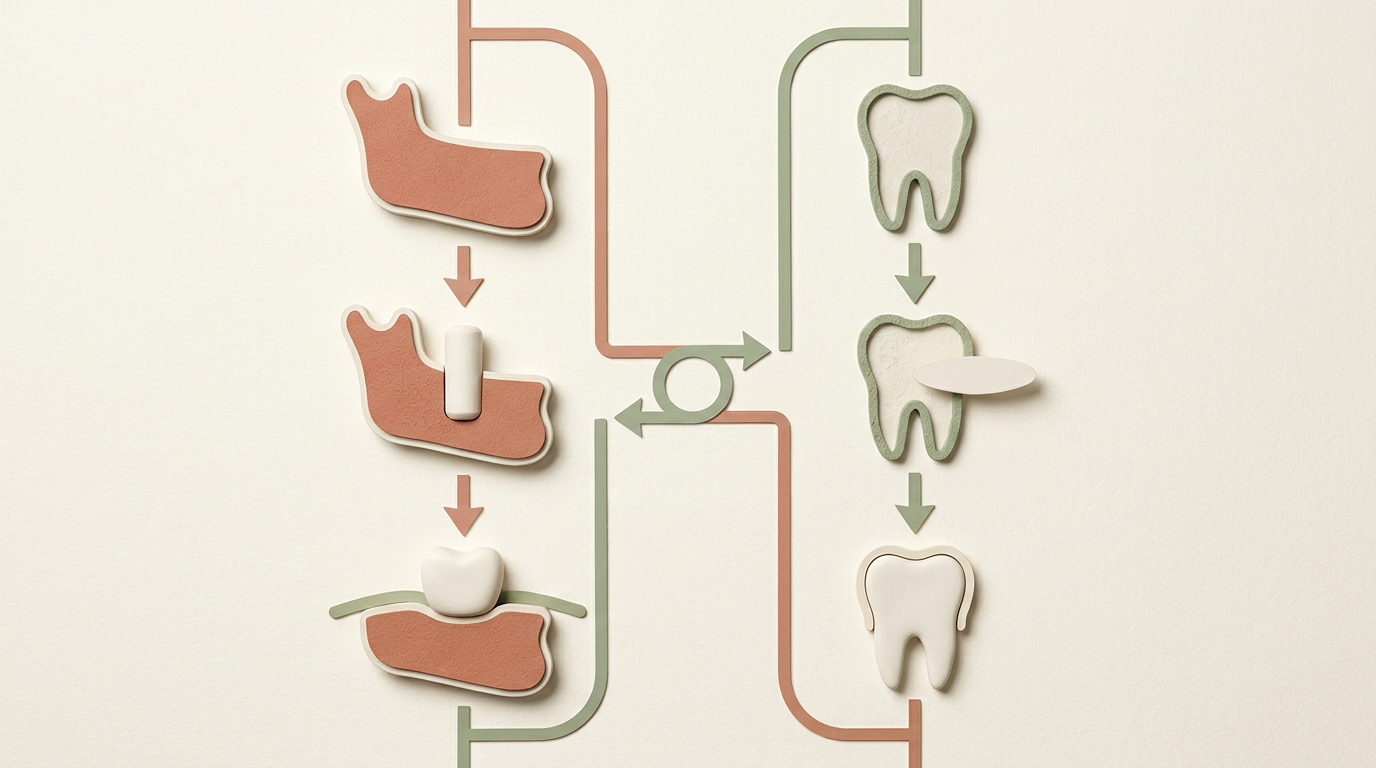
A typical combined plan moves through these stages:
- Comprehensive workup. Full-mouth exam, digital imaging, bite analysis, periodontal evaluation, and shade mapping. Any decay or gum disease is treated before cosmetic planning begins.
- Digital smile design. The target smile — tooth shape, length, midline, shade — is designed before surgery, so the implant is placed to serve that design rather than the other way around.
- Implant surgery. The implant is surgically placed into the jawbone, acting as an artificial tooth root. Rice Dentistry uses advanced 3D surgical design for implant placement, which lets the surgical and restorative plans share one blueprint.
- Healing. Roughly 3–6 months of osseointegration. A temporary may be worn to preserve the smile's appearance.
- Final implant crown. The crown is fabricated to the pre-approved shape and shade.
- Veneers. Veneers on adjacent teeth are prepared and bonded to match the finalized implant crown — not the other way around.
How do implants and veneers compare as treatments?
They solve different problems and carry different tradeoffs. The table below summarizes the practical differences patients ask about most.
| Dimension | Dental implants | Veneers |
|---|---|---|
| What it replaces or changes | Missing tooth root and crown | Front surface of an existing tooth |
| Placement | Surgically placed into the jawbone | Bonded to the front of the tooth after enamel removal |
| Reversibility | Surgical, not reversible | Not reversible — enamel is removed |
| Typical timeline | ~3–6 months of healing before the final restoration | Weeks; composite can be fewer visits than porcelain |
| Bone impact | Stimulates bone tissue; dentures can lead to bone loss over time | No impact on bone |
| Insurance | Varies by plan; often partially covered when restorative | Cosmetic; may not be covered unless deemed medically necessary |
| Material tradeoff | Titanium root with crown (zirconia, porcelain, etc.) | Porcelain is stronger and more stain-resistant; composite needs less enamel removed and fewer visits |
Veneers are also not for every mouth. Patients who clench or grind their teeth, or have a deep overbite, may not be good candidates — another reason the full-mouth evaluation that comes with a combined plan matters.
Who in Irvine is a good candidate for combined treatment?
Candidacy is driven by general health, gum health, and bone density — not age. If bone loss has already occurred, advanced techniques such as bone grafting may still make implants possible, which is often the pivot point for patients who have worn removable dentures for years and want to stop losing bone. For the veneer portion, the mouth has to be healthy first, and the bite has to be stable enough that porcelain won't chip under grinding forces.
Rice Dentistry, located at 15785 Laguna Canyon Rd Ste 200 in Irvine's Spectrum area and serving patients across Orange County since 1987, approaches full-smile cases this way: its Full Mouth Reconstruction protocol uses six or more implants per arch rather than the traditional All-on-4 system, with a Zirconia and layered porcelain prosthesis on titanium connections. For patients combining implants with veneers on remaining teeth, that same restorative philosophy — more support, layered materials, bite-driven design — carries through.
What should Irvine patients ask before committing to one office for both?
Ask who is doing the surgery, who is doing the cosmetic restoration, and whether the plan is written down before anything is prepared. A combined-treatment office should be able to show you a digital smile design, a surgical plan, and a sequencing timeline at the consultation — not after the fact. Credentials matter too: implant work benefits from a periodontal specialist on the team, and cosmetic work benefits from a dentist with documented continuing education in occlusion and esthetics.
At Rice Dentistry, Dr. Scott Rice has 40 years of experience practicing dentistry and was the first dentist in Orange County to receive the title of Mentor at the Kois Center, where he now serves as a Clinical Instructor. Dr. Nicolas Ravon holds dental degrees from Europe and America and a specialist certification in periodontology, and Dr. Taylor Rice has completed over 500 hours of continuing education, including advanced coursework at the Kois Center. That mix — surgical, periodontal, and cosmetic depth on one team — is what makes a true single-office combined plan possible rather than theoretical.
Frequently asked questions
Can I get dental implants and veneers at the same appointment?
No. Implants are placed surgically into the jawbone and commonly need a healing period before the final restoration is attached. Veneers are designed and bonded around that finalized implant crown so the shade and shape match, which means they come at the end of the sequence, not the same day as surgery.
Does insurance cover veneers in Irvine, CA?
Veneers are considered cosmetic dentistry and may not be covered by insurance unless they are deemed medically necessary. Implant treatment is often handled differently and may receive partial coverage depending on the plan. The practical step is to request a written treatment plan and submit it to your insurer for a pre-determination of benefits before work begins.
Will the implant crown match my veneers?
Yes, when both are planned by one office using a single shade and design blueprint. The implant crown is finalized first, then the veneers on adjacent teeth are fabricated to match it. Splitting the work across two offices is where shade mismatches most often originate, because each lab is working from different records.
Are veneers a good option if I grind my teeth?
Often not without additional planning. Patients who clench or grind their teeth, or who have a deep overbite, may not be good candidates for veneers because the porcelain can chip under those forces. A bite evaluation and, in many cases, a night guard or orthodontic correction come before veneers are considered.
What happens if I have bone loss and want implants?
Bone loss does not automatically disqualify you. Advanced techniques such as bone grafting may still allow you to qualify for dental implants by rebuilding the volume needed to anchor the implant. This is often relevant for patients who have worn removable dentures, because dentures can lead to bone loss over time due to lack of jawbone stimulation.
How long does a combined implant-and-veneer plan take from start to finish?
Plan on roughly six months to a year for most cases. The implant portion alone needs a healing period before the final restoration, and the veneer design and bonding stage is layered on after. Cases involving bone grafting, periodontal treatment, or orthodontic prep extend that window; a written sequencing plan at the consultation will tell you what to expect for your specific mouth.
The bottom line for Irvine patients
Combining implants and veneers in one Irvine office is worth it when the practice can genuinely deliver both — surgical, periodontal, and cosmetic expertise, with a single digital plan that treats your smile as one project rather than two invoices. The address alone is not the reason to choose a practice; the integrated planning is. Readers in Irvine who want this evaluated under one roof can reach Rice Dentistry at (949) 551-5902 or https://irvinedentalcare.com to arrange a consultation and see a sequenced plan before any work begins.