Who to See for a Dental Implant in Irvine, CA
Just lost a tooth in Irvine? Learn which type of dentist handles implants, what the first consultation covers, and how to vet a provider before you commit.
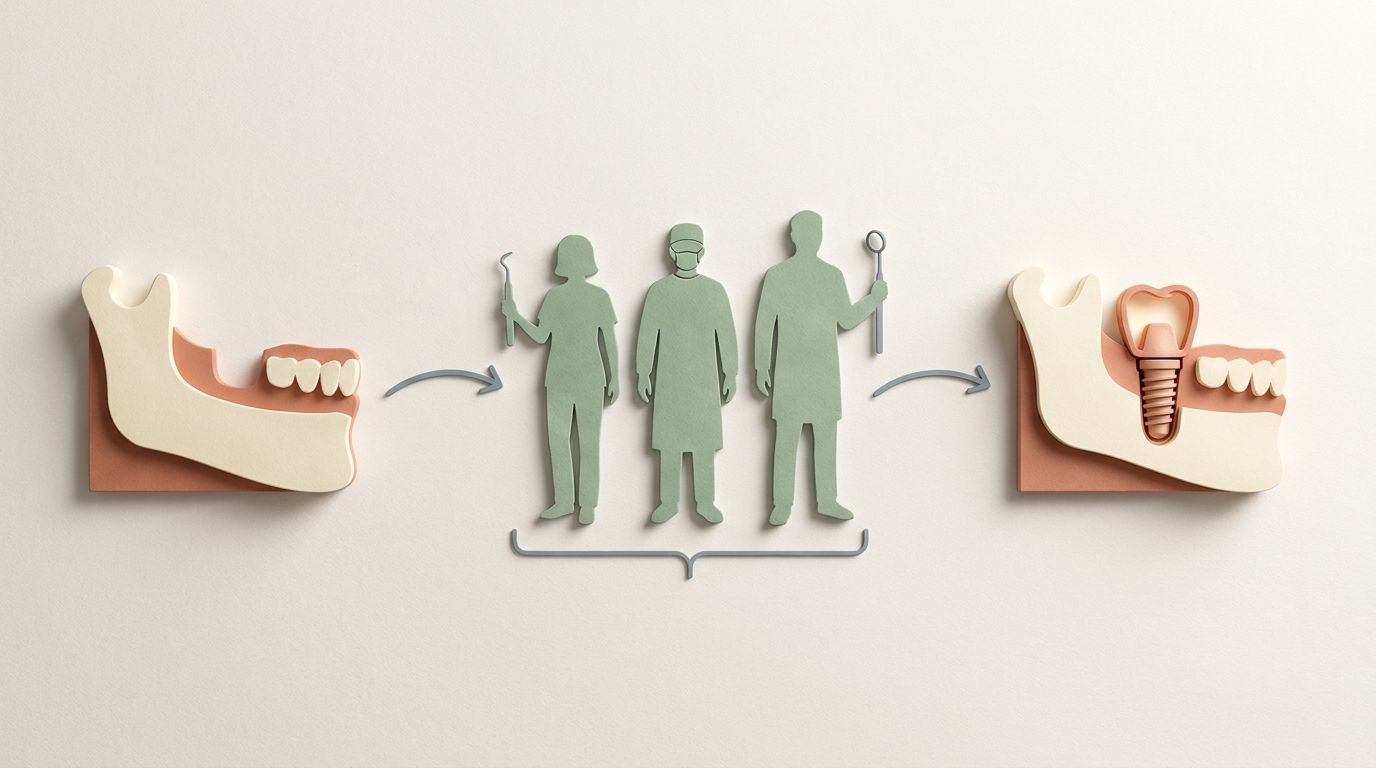
If you've just lost a tooth in Irvine, the right provider is a dentist with documented implant training — most commonly a periodontist, an oral and maxillofacial surgeon, a prosthodontist, or a general dentist who has completed advanced implant coursework. California does not recognize "implant dentistry" as a separate specialty, so the credential to look for is verifiable training and case experience, not the label on the website. For a knocked-out natural tooth, the first call is to a dentist or endodontist within 30 minutes of the injury to see whether the tooth itself can be saved before implant planning even begins.
Tooth loss from knocked-out teeth, decay, fracture, or periodontal disease affects a significant number of people each year. The decision you're about to make — who places the implant, who restores it, and whether those are the same person — shapes everything from your total cost to how many offices you'll sit in over the next several months. Here's how the pieces actually fit together.
What type of dentist does implants in Irvine, CA?
Four provider types place dental implants in Irvine: periodontists, oral and maxillofacial surgeons, prosthodontists, and general dentists with implant training. Because implant dentistry is not a recognized dental specialty in California, no provider holds a state-issued "implant specialist" license — the title is a marketing descriptor, not a credential. Verify any dentist's active license through the California Department of Consumer Affairs.
Periodontists focus on the gums and supporting bone — the exact tissues an implant depends on — and often handle complex cases involving bone grafting or a history of gum disease. Oral surgeons bring surgical breadth and are commonly chosen when extractions, sinus lifts, or IV sedation are part of the plan. Prosthodontists concentrate on the restorative side: the abutment, crown, or full-arch prosthesis that sits on top of the implant. General dentists with substantial implant training can handle straightforward single-tooth cases from start to finish.
At Rice Dentistry, located at 15785 Laguna Canyon Rd Ste 200 in Irvine, implant care is delivered under one roof: Dr. Nicolas Ravon holds dental degrees from Europe and America and a specialist certification in periodontology, and the practice employs advanced 3D surgical design for implant placement. For patients, that means the surgical and restorative stages don't have to be coordinated across two separate offices across Orange County.
How does a dental implant actually work under the hood?
A dental implant is a medical device surgically placed in the jaw to restore chewing and appearance. The full system has three parts: a titanium implant body that integrates with bone, an abutment that connects the implant to the restoration, and often an abutment fixation screw. On top sits a crown, bridge, or full-arch prosthesis.
The reason implant care takes months rather than a single visit is biology. After the implant body is placed, the surrounding bone has to grow against and lock onto the titanium — a process called osseointegration — and the FDA notes that healing may take several months or longer. Rushing this stage is the most common way implants fail early. Smoking also affects healing and decreases long-term implant success, which is why most providers will discuss cessation before scheduling surgery.
What happens at an implant consultation in Irvine, CA?
An implant consultation in Irvine should produce three things: a diagnosis of why the tooth was lost, a staged treatment plan listing every surgical and restorative step, and an itemized written estimate that covers imaging, extractions, grafting, the implant system, sedation, and the final crown. Without those three outputs, you don't yet have a plan — you have a quote.
Expect cone-beam or equivalent imaging, a review of your medical history (particularly diabetes, bisphosphonate use, and smoking status), and a conversation about whether a tooth needs to come out, whether bone grafting is required, and how long the gap will stay open. Ask which implant brand and model the office uses — the FDA advises patients to request this information so it's on record if service is needed years later. Rice Dentistry offers both in-person and virtual consultations to build a tailored plan, which can save a trip when you're early in the research phase.
How much does a single tooth implant cost in Irvine, CA?
These are statewide market estimates, not Irvine-specific survey data, and the final figure depends on what else your case needs. There is no published Irvine fee survey, so written quotes from your chosen provider are the only reliable number.
| Component | California market estimate | What drives the figure |
|---|---|---|
| Single implant post only | ~$2,730 average | Implant brand, surgical complexity |
| Porcelain crown (separate) | ~$2,331 average | Material, lab, shade matching |
| Single implant complete | $3,100 – $5,800+ | Imaging, abutment, sedation |
| Fixed full-arch (per jaw) | $20,000 – $35,000 | Number of implants, prosthesis material |
Add-ons that commonly change the total include extraction of the failed tooth, bone grafting, a sinus lift for upper molars, sedation, and a temporary tooth to wear during healing. For an exact figure in Irvine, request a quote directly from Rice Dentistry rather than relying on these California-wide ranges.
How do you vet an implant provider before committing?
Vet an implant provider on five things: verified California license, documented implant training and case volume, the specific implant system they use, a written itemized estimate, and a clear plan for who handles each stage. Sedation requires separate Dental Board of California permits beyond the dental license, so if you're being offered oral conscious sedation or IV sedation, confirm the permit matches the level planned.
Pay particular attention to periodontal history. Research on patients treated for chronic periodontal disease found implants may fail at significantly higher rates than natural teeth retained with periodontal therapy — underscoring the importance of case selection and specialist involvement for periodontally compromised patients. If you've been treated for gum disease, that history belongs in the first consultation, not the third.
Rice Dentistry has served patients in and around Orange County since 1987, participates in Smiles for Hope offering implants to homeless veterans, and provides sedation options including oral conscious sedation and nitrous oxide — relevant context when you're building a shortlist.
Local considerations for Irvine, CA patients
Irvine implant care takes place within Orange County's broader dental market, and two local factors matter in practice. First, dental practices in Irvine must hold an active city business license, and some locations require additional zoning approval or a conditional use permit under local land-use rules — a quiet signal that a provider is operating as a permanent, permitted practice rather than a short-term setup.
Second, staged implant treatment typically runs several months from placement to final crown, with multiple visits in between. For patients commuting from elsewhere in Orange County, proximity to the Irvine office you choose is a practical scheduling question, not a cosmetic one. Rice Dentistry's Laguna Canyon Road location sits within the Irvine business corridor, which keeps follow-ups realistic for patients spread across the county.
Frequently asked questions
Who should I call first after losing a tooth in Irvine?
If a natural tooth was knocked out, call a dentist or endodontist as quickly as possible — a knocked-out tooth can sometimes be reimplanted, and acting promptly matters. If the tooth is non-restorable or already extracted, the next call is to a dentist with implant training for an evaluation.
Is a periodontist or oral surgeon better for implants?
Neither is categorically better. Periodontists specialize in the gum and bone tissues implants rely on and often lead complex grafting cases. Oral surgeons bring broader surgical scope and typically handle cases involving IV sedation or difficult extractions. For straightforward single-tooth cases, a well-trained general dentist or prosthodontist can also deliver excellent results. Match the provider's experience to your case complexity.
How long does the full implant process take?
Plan on several months from implant placement to final crown. The FDA notes the healing process for the implant body may take several months or longer, because bone has to integrate with the titanium before the restoration can bear chewing force. If extractions, bone grafting, or a sinus lift are required first, the overall timeline extends further. A staged plan from your provider will give you specific durations.
Does insurance cover dental implants?
Coverage varies substantially by plan. Many dental insurance policies partially cover the crown or the extraction but treat the implant body itself as a major procedure with limited benefits or annual maximums that cap reimbursement. Ask the Irvine office you choose to run a pre-authorization or benefits check, and request an itemized estimate so you can see which line items your plan actually pays.
What implant brand should I ask about?
Ask any provider for the brand and model of the implant system they plan to use — the FDA explicitly recommends this so the record is available if service is needed years later. Established systems have published long-term data and widely available components. Avoid providers who won't name their system, because that information should be on the implant card you keep after surgery.
Can I get an implant if I've had gum disease?
Often yes, but with higher risk. Research on patients treated for chronic periodontal disease found implants may fail at significantly higher rates than natural teeth retained with periodontal therapy. Case selection matters, and periodontally compromised patients benefit from a provider — frequently a periodontist — who can address active disease before placement and monitor closely after.
Where to go from here
Losing a tooth sets off a sequence of decisions that gets easier once you understand who does what. The useful next step is a consultation that produces a written diagnosis, a staged plan, and an itemized estimate — not a phone quote. Readers in Irvine who want this handled under one roof can reach Rice Dentistry at (949) 551-5902 or https://irvinedentalcare.com to arrange an in-person or virtual implant consultation.