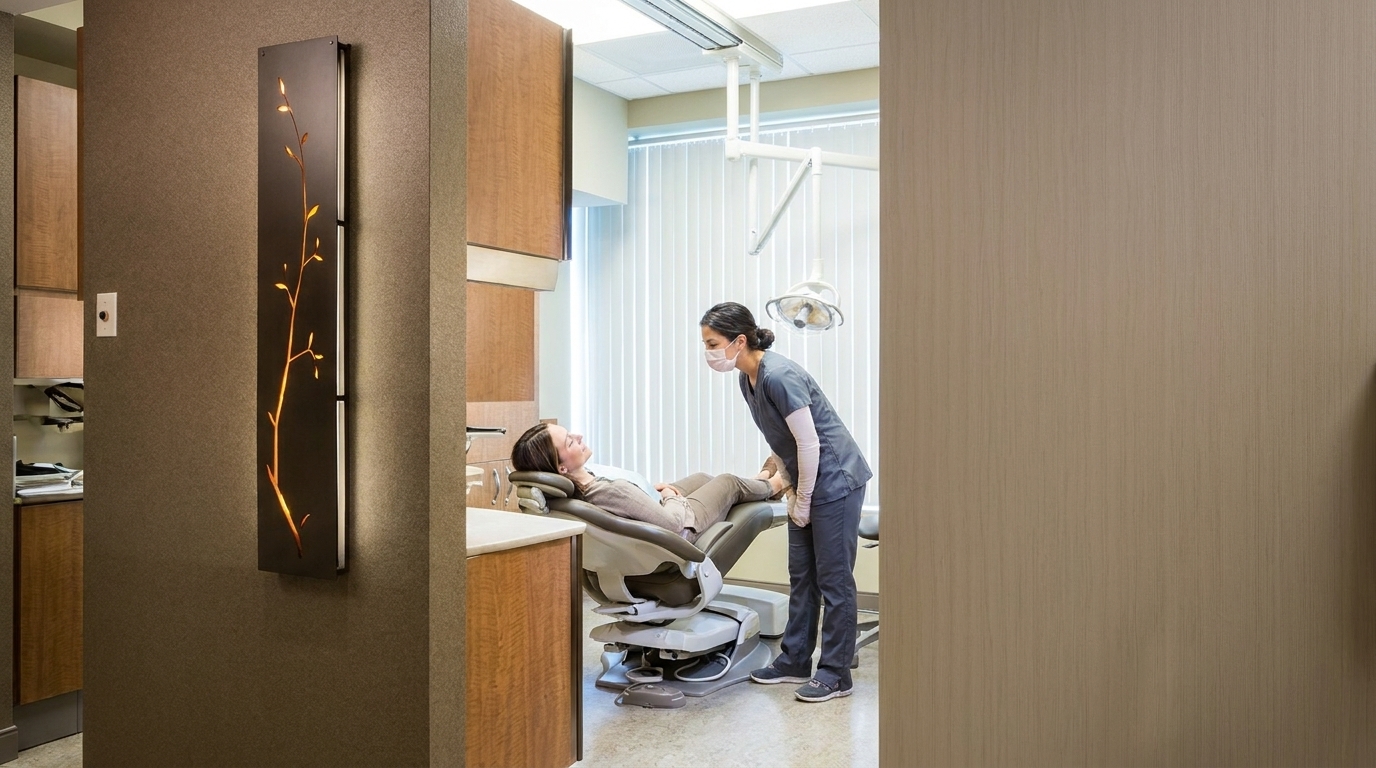
Porcelain Veneers in Irvine, CA: How the Process Works
A step-by-step look at how porcelain veneers are planned, prepared, fabricated, and bonded in Irvine, CA — plus what to expect at each visit.
Getting porcelain veneers in Irvine, CA typically unfolds across three main visits: a consultation and smile-design appointment, a preparation appointment where a small amount of enamel is removed and an impression or digital scan is taken, and a final bonding appointment where the custom shells are tried in, adjusted, and cemented to your teeth. Because enamel removal is permanent, those prepared teeth will always need a veneer or similar restoration going forward. Between preparation and delivery, you may wear temporary veneers while the lab crafts the final ones.
What happens at a porcelain veneer consultation in Irvine, CA?
The first visit is a planning appointment: your dentist evaluates your teeth, gums, and bite, discusses the look you want, and confirms whether veneers are the right tool for the job. Veneers can improve the appearance of teeth that are chipped, stained, or crooked, and can mask gaps in a smile. Any existing decay or gum disease must be treated first, because placing veneers over unhealthy teeth can worsen existing problems.
At Rice Dentistry, located on Laguna Canyon Road near the Irvine Spectrum in the 92618 corridor, this stage can happen in person or through a virtual consultation — a format Dr. Taylor Rice has helped pioneer for patients commuting from across south Orange County. Because veneers sit within the practice's cosmetic menu alongside hybrid veneers, BioClear, and Invisalign, the planning conversation often includes whether a different tool would deliver the result more conservatively.
Candidacy matters here. If you clench or grind your teeth, or have a deep overbite, porcelain veneers may not be the right choice, and a protective appliance or alternative restoration may be recommended instead.
How are the teeth prepared for porcelain veneers?
At the preparation visit, the dentist removes a small amount of enamel from the front and sides of each tooth receiving a veneer, then captures the shape with either a physical impression or a digital 3D scan. That record is sent to a dental laboratory, where a technician custom-fabricates each porcelain shell. The preparation is permanent — enamel does not grow back — so the tooth will always need a veneer or similar restoration from that point on.
That's why the enamel reduction is measured in fractions of a millimeter rather than the fuller reshaping a crown requires. Composite veneers, by comparison, may require less enamel removal and fewer visits, but they are not as stain- or wear-resistant as porcelain.
Because patients often schedule cosmetic work around travel seasons, many plan the preparation visit several weeks before a wedding, reunion, or holiday trip to allow the lab fabrication window and the final bonding appointment to land comfortably beforehand.
What do temporary veneers do while the lab makes the final ones?
Between the preparation and bonding visits, you may wear temporary veneers that protect the reduced tooth surfaces and preview the shape of the final result. Temporaries are not as strong or polished as the finished porcelain, so the guidance during this interval is to favor softer foods, avoid biting directly into hard items with the front teeth, and keep the area clean around the gumline.
The temporary phase also serves a design purpose: it's a live rehearsal of the proposed length, contour, and lip support. If something feels off — a tooth edge that catches your lip, a shape that reads too square — this is the window to flag it so adjustments can be built into the final porcelain before cementation.
How does the final porcelain veneer placement appointment work?
At the fitting appointment, the dentist places each veneer on the tooth to check the fit and shape, makes any adjustments, cleans the teeth, and then bonds the veneer in place. The try-in is the quality-control moment: color against your natural teeth, edge alignment, how light moves across the surface, and how the veneers meet your lower teeth when you bite and speak.
When a single new veneer is being matched beside older dental work, shade, translucency, tooth shape, surface texture, and the way light reflects from the restoration all influence how naturally the new veneer blends into the smile. Once everyone is satisfied, the tooth is cleaned, the veneer is bonded, and the bite is refined.
Expect a brief adjustment period — it may take a few days to get used to a new veneer as your tongue, lips, and bite settle around the new contours.
Am I a good candidate for veneers in Irvine, CA?
Good candidates have healthy teeth and gums, realistic cosmetic goals, and a bite that will not routinely overload thin porcelain. Patients who clench, grind, or have a deep overbite may be steered toward a different plan or asked to commit to a nightguard. Any active decay or gum disease is treated first. Veneers are considered cosmetic dentistry and may not be covered by insurance unless deemed medically necessary.
In Irvine, CA, that means your care should sit with a licensed California dentist from consultation through bonding and follow-up.
How porcelain veneers compare to composite veneers
| Factor | Porcelain veneers | Composite veneers |
|---|---|---|
| Visits typically required | Usually three (consult, prep, bond) | Often fewer visits |
| Enamel removed | Small amount from front and sides | May require less enamel removal |
| Stain & wear resistance | Strong, long-lasting, natural-looking | Not as stain- or wear-resistant |
| Repairability | May need re-bond, repair, or replacement over time | Easier to fix if damaged |
| Reversibility | — | Not reversible — enamel is removed |
What do patients say about the experience?
⭐️⭐️⭐️⭐️⭐️I had my Bioclear procedure done at Rice Dentistry, and I couldn't be happier with the results! From the moment I walked in, Andrea greeted me with a warm welcome and answered all my questions with patience and clarity. Dr. Taylor Rice was incredible, ensuring that I was comfortable throughout the entire process. The team truly made my experience enjoyable and stress-free. I'm absolutely thrilled with my new smile! I highly recommend Rice Dentistry to anyone looking for top-notch care and exceptional results. Thank you, everyone!
Frequently asked questions about porcelain veneers in Irvine, CA
How many appointments does the porcelain veneer process take?
Porcelain veneer treatment typically involves three main visits in Irvine, CA: a consultation and planning appointment, a preparation appointment where enamel is reduced and an impression or digital scan is taken, and a final appointment where the veneers are tried in, adjusted, and bonded to the teeth. Temporary veneers may be worn between the second and third visits.
Is getting porcelain veneers reversible?
No. Porcelain veneer treatment is not reversible because a small amount of enamel is permanently removed from the front and sides of each tooth to prepare it for bonding. Enamel does not regenerate, so the prepared teeth will always need a veneer or another restoration covering them going forward.
Will my veneers be covered by dental insurance?
Usually not. Veneers are considered cosmetic dentistry and may not be covered by insurance unless the treatment is deemed medically necessary — for example, to restore a tooth damaged by trauma. Many Irvine, CA patients plan for veneers as an out-of-pocket cosmetic investment and ask their dental office for a written estimate before the preparation appointment.
Can I still get cavities under my veneers?
Yes. Patients can still develop cavities under or around a veneer after placement, because the veneer covers only the front surface of the tooth and not the entire tooth structure. Daily brushing and flossing, along with routine cleanings and exams, remain essential to protect the tooth beneath the porcelain and the surrounding gumline.
What if I grind my teeth — can I still get veneers?
If you clench or grind your teeth, or have a deep overbite, veneers may not be a good choice without additional planning. Chronic grinding can chip, crack, wear down, or loosen porcelain over time. Your dentist may recommend a nightguard, bite adjustment, or an alternative restoration before deciding whether porcelain veneers are appropriate for you.
How long does the lab take to make porcelain veneers?
After the preparation visit, the impression or scan is sent to a dental laboratory where a technician custom-fabricates each shell. The exact turnaround depends on the lab and the complexity of the case. During this interval, temporary veneers may be placed to protect the prepared teeth and preview the look of the final restoration.
Planning your veneer process in Irvine, CA
Porcelain veneers reward careful planning: a thorough consultation, a conservative preparation, a well-designed temporary phase, and a final bonding visit that respects shade, translucency, and the way light moves across your smile. Done well, the result looks like teeth, not like dentistry.
Readers in Irvine, CA who want this handled professionally can reach Rice Dentistry at (949) 551-5902 or https://irvinedentalcare.com to start a consultation and map out the process on their own timeline.