Returning to the Dentist After Years Away in Tustin, CA
A fear-free re-entry guide for Tustin patients overdue on dental care: what the first visit looks like, sedation options, and how treatment gets sequenced.
If you haven't been to a dentist in years and the thought of walking into an office makes your stomach drop, the fastest way back is a single, low-pressure consultation with a sedation-capable practice in Tustin, CA — no cleaning, no drilling, no judgment on the first visit. You share your history, the dentist performs a gentle exam and imaging, and together you build a phased plan that can use nitrous oxide, oral sedation, or IV sedation to keep you comfortable when actual treatment begins. Some sedation-capable practices in the Tustin area structure first appointments exactly this way.
What does the first appointment back actually look like in Tustin, CA?
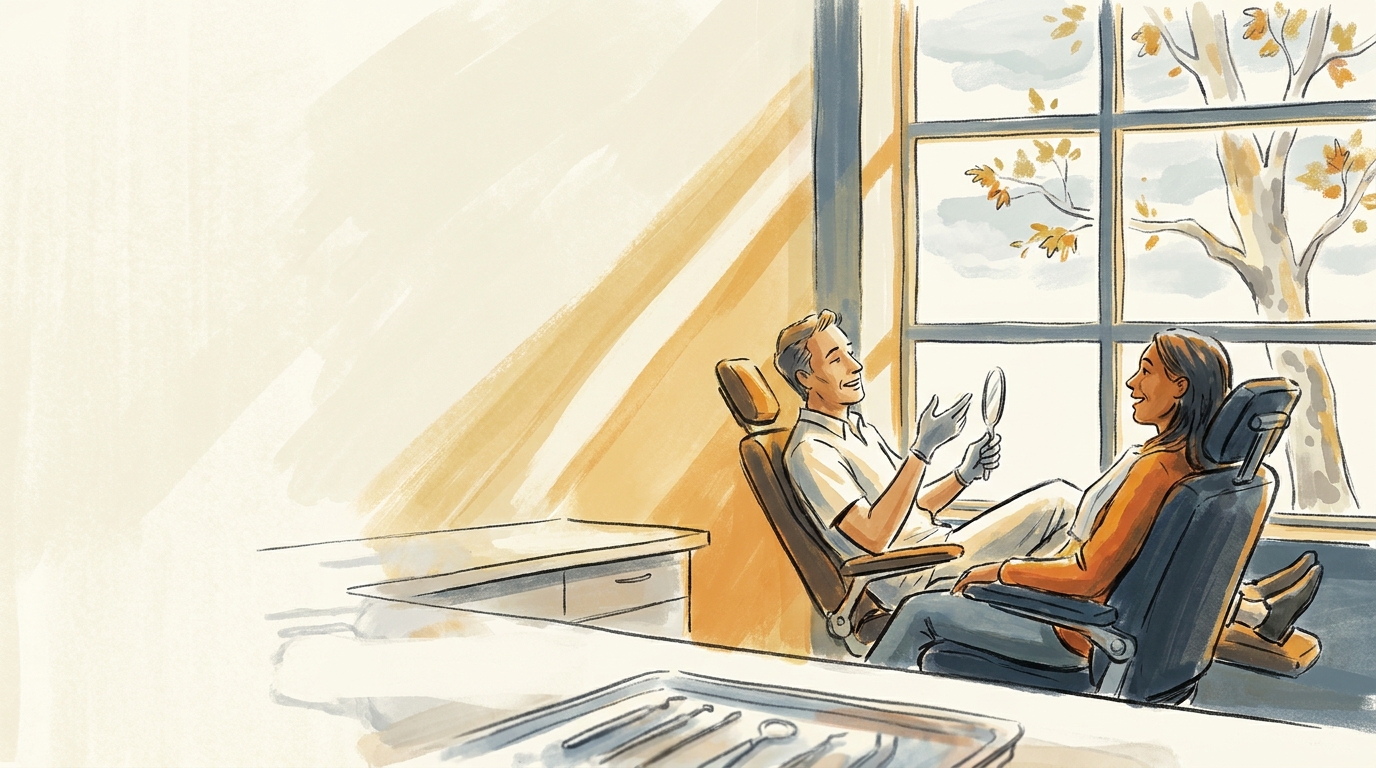
Your first visit back is a consultation and diagnostic exam — not treatment. Expect a conversation about your fear and dental history, a set of digital X-rays, an intraoral scan or photos, a periodontal (gum) evaluation, and a written phased treatment plan with sedation options and costs. Re-entry first visits in Tustin are consultations and diagnostic exams and involve no drilling.
The point of that first appointment is to replace the unknown with a map. You don't leave with a repaired tooth; you leave with a diagnosis, a sequence, and a sedation plan matched to your anxiety level. For long-avoidant patients, this framing alone tends to lower the emotional temperature more than anything a dentist can prescribe.
How do you tell a dentist you haven't been in years?
Say it plainly, in writing if possible, before you arrive. Call the office or use the new-patient form to state: how long it's been, what caused the avoidance (fear, trauma, cost, a bad past experience), what you're worried about hearing, and whether you want sedation available for the first exam. A practice experienced with re-entry patients will adjust the visit around that information rather than react to it in the chair.
At practices experienced with re-entry patients, this kind of disclosure is routine — offices that specialize in anxious adults are built around compassionate handling of dental anxiety. You are not the first patient to walk in after a decade away, and you won't be the last this month.
What sedation options are available for overdue dental patients in Tustin, CA?
Three sedation tiers are commonly used for overdue patients in the Tustin area: nitrous oxide (laughing gas) for mild anxiety, oral sedation (typically a benzodiazepine like Halcion) for moderate anxiety, and IV moderate sedation for high anxiety or long, complex appointments. On-site general anesthesia exists in the local market but is reserved for the most complex cases or medically complex patients.
The right choice depends on how much work you need, how long you can tolerate being in the chair, and your medical history. A patient facing one filling and a cleaning is a different sedation candidate than a patient facing four extractions, scaling and root planing, and multiple crowns in the same visit.
| Sedation Option | Typical Use | Typical Add-On Cost Range | Recovery |
|---|---|---|---|
| Nitrous oxide | Mild anxiety, shorter visits | $25 – $150 per visit | Drive yourself home |
| Oral sedation (Halcion) | Moderate anxiety, longer visits | $150 – $500 per appointment | Escort required |
| IV moderate sedation | High anxiety, complex or combined procedures | $250 – $1,500+ per appointment | Escort required, rest of day off |
| General anesthesia | Severe cases, medically complex patients | $800 – $3,500+ | Full-day recovery |
These are national add-on ranges for the sedation itself — the underlying dental treatment is billed separately, and for long-avoidant patients that underlying total is usually the larger number. California regulates moderate sedation, deep sedation, and general anesthesia through the Dental Board of California, which requires specific permits, staffing, monitoring, and emergency-preparedness standards for offices offering these services.
How is treatment sequenced when you're years overdue?
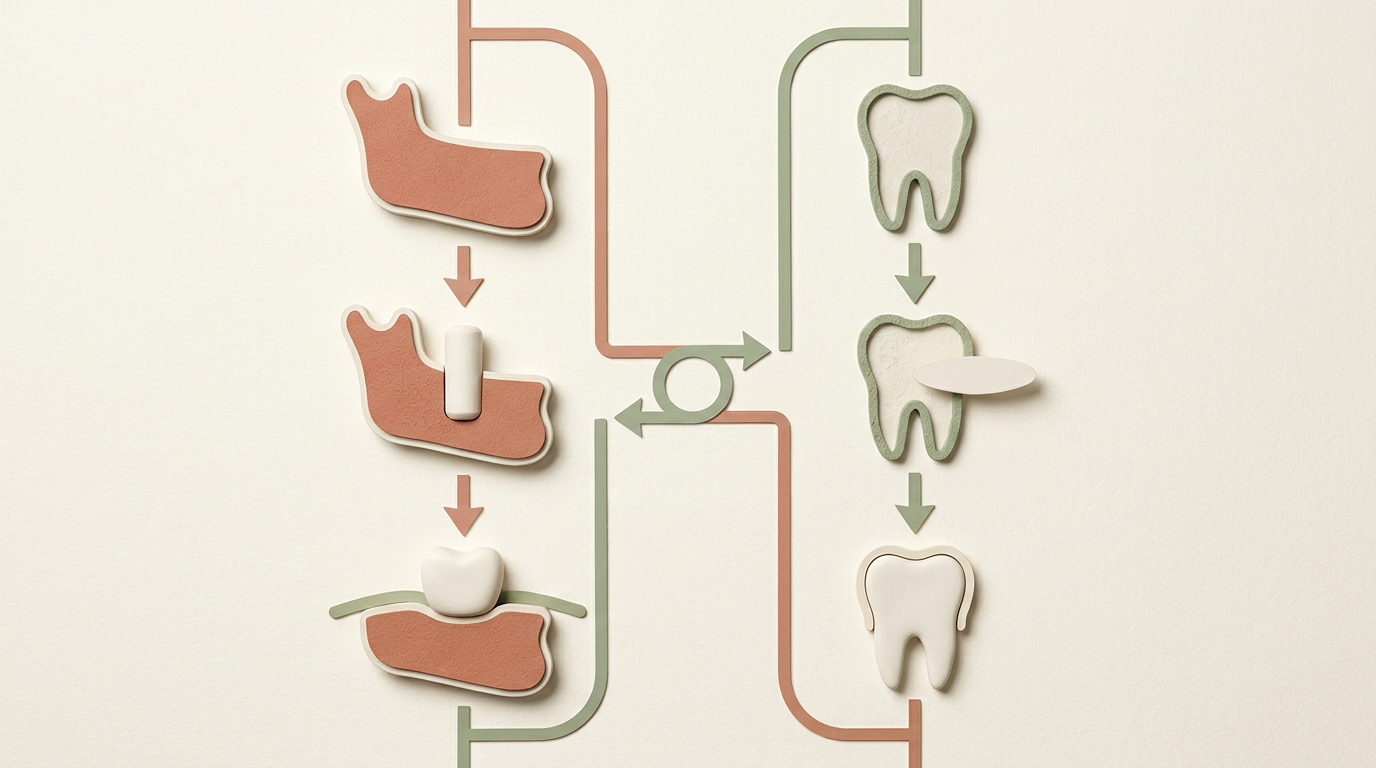
Overdue treatment is almost always phased, not stacked into one marathon visit. The standard sequence is: (1) stabilize pain and infection, (2) treat active periodontal disease, (3) restore broken or decayed teeth, (4) replace missing teeth if needed, and (5) move to maintenance cleanings every 3-6 months. Sedation is typically used for phases 1-4; phase 5 rarely needs it.
Phasing matters because it protects your budget and your nervous system. Trying to complete a full-mouth rehabilitation in one sedated visit is possible in some Tustin practices that combine sedation with same-day comprehensive treatment, but it's not the default — and it isn't the right call for every patient. A good phased plan gives you off-ramps between stages so you can pause, breathe, and continue on your timeline.
The stabilization phase
If a tooth is broken, abscessed, or actively painful, that gets addressed first, often within the first one or two working appointments. This is where sedation earns its keep — extractions, root canals, or emergency restorations on a fearful patient go dramatically better with nitrous or oral sedation on board.
The periodontal phase
Patients who haven't seen a hygienist in years frequently have moderate to advanced gum disease, not just plaque. Scaling and root planing — a deep cleaning below the gumline — is often done in one or two quadrants at a time under local anesthesia, sometimes with nitrous. Skipping this phase and jumping straight to fillings or crowns undermines everything that comes after it.
The restorative and replacement phase
Fillings, crowns, implants, and bridges come after the mouth is stable and the gums are healthy. This is also where the highest-anxiety patients often consolidate work into fewer, longer sedated appointments rather than spreading it across many short visits.
What should Tustin, CA patients look for in a re-entry dentist?
Look for six things: a written phased treatment plan after the first exam, sedation options beyond nitrous alone, in-house restorative and periodontal capability so you aren't referred out mid-plan, transparent add-on sedation pricing, current California Dental Board permits for the sedation level offered, and a documented pattern of treating anxious or long-avoidant adults specifically.
Tustin sits inside a dense Orange County market — patients routinely compare practices in Tustin against options in Orange, Irvine, Costa Mesa, and Newport Beach — so you have real choice. Tustin patients have real choice in this corridor when they want sedation options combined with comprehensive restorative work under one roof. The strongest re-entry practices in the area are distinguished by long-term patient loyalty and gentle handling of nervous patients.
How much should you budget for full re-entry care?
Budget for two separate cost buckets: sedation add-ons ($25 for nitrous up to $3,500+ for general anesthesia per session) and the actual dental work, which for long-avoidant patients often includes multiple restorations, periodontal therapy, and sometimes extractions or implants. A realistic full re-entry plan for a patient years overdue commonly lands in the low-to-mid four figures, and can exceed that when implants or full-arch work are involved.
Insurance matters here. Some Tustin-area providers accept most PPO plans and Medi-Cal, which materially changes the out-of-pocket math for patients who delayed care partly because of cost. Ask specifically which of your procedures are covered, what the annual maximum is, and whether the sedation itself is a covered benefit or a straight out-of-pocket add-on — they're often billed differently.
Frequently asked questions
Will the dentist lecture me for waiting this long?
A practice that specializes in anxious and overdue patients will not lecture you — it would defeat the point of the visit. Expect a matter-of-fact conversation about what's going on now and what to do about it. If a first-consult dentist makes you feel judged, that's useful information: it means the practice isn't set up for re-entry care, and you should look elsewhere in the Tustin area.
Can I get sedation for just the exam and cleaning?
Yes. Nitrous oxide is commonly offered for exams, X-rays, and cleanings when a patient's anxiety would otherwise prevent the appointment from happening. Oral sedation is also possible for the first visit if you disclose your fear ahead of time and have someone to drive you. This is a normal request in Tustin sedation practices, not an unusual one.
How long until my mouth is fully caught up?
The timeline for a phased re-entry plan varies depending on how much work is needed and how many appointments you can tolerate per month. Stabilization is typically prioritized early when there is active pain or infection, periodontal therapy follows, and restorative work is paced to your schedule and budget.
Is IV sedation safe if I have a medical condition?
IV moderate sedation is safe for most healthy adults but requires medical screening beforehand. Conditions like sleep apnea, heart disease, or certain medications change the risk profile. California Dental Board rules require offices offering moderate or deeper sedation to maintain specific monitoring equipment, staff training, and emergency protocols. Always disclose your full medical history and medication list during the consultation.
What if I'm embarrassed by how my mouth looks?
Dental teams that treat overdue patients see the full spectrum every week — visible decay, missing teeth, heavy tartar, gum recession. Nothing you show up with will be new to them. Rice Dentistry's reviews repeatedly reference staff warmth and compassionate care, which is exactly the quality that matters when embarrassment is part of what kept you away.
Do I need to pay for everything upfront?
No. Phased treatment plans are billed per appointment or per phase, not as one lump sum. Ask specifically about payment plans, third-party financing (such as CareCredit), and whether the office will submit predeterminations to your insurance before major work so you know your out-of-pocket before you commit.
Getting started
The hardest appointment is the one that gets you back in the chair — after that, the machine of phased care takes over and the anxiety curve bends downward with each visit. If you want a re-entry consultation handled by a practice experienced with long-avoidant adults in the Tustin, CA area, Rice Dentistry can be reached at irvinedentalcare.com to schedule a first exam and talk through sedation options before any treatment begins.