Knocked Out or Cracked Tooth in Irvine, CA: First 60 Minutes
A minute-by-minute Irvine, CA guide to saving a knocked-out or cracked tooth: how to handle it, how to store it, and when to call a dentist versus the ER.
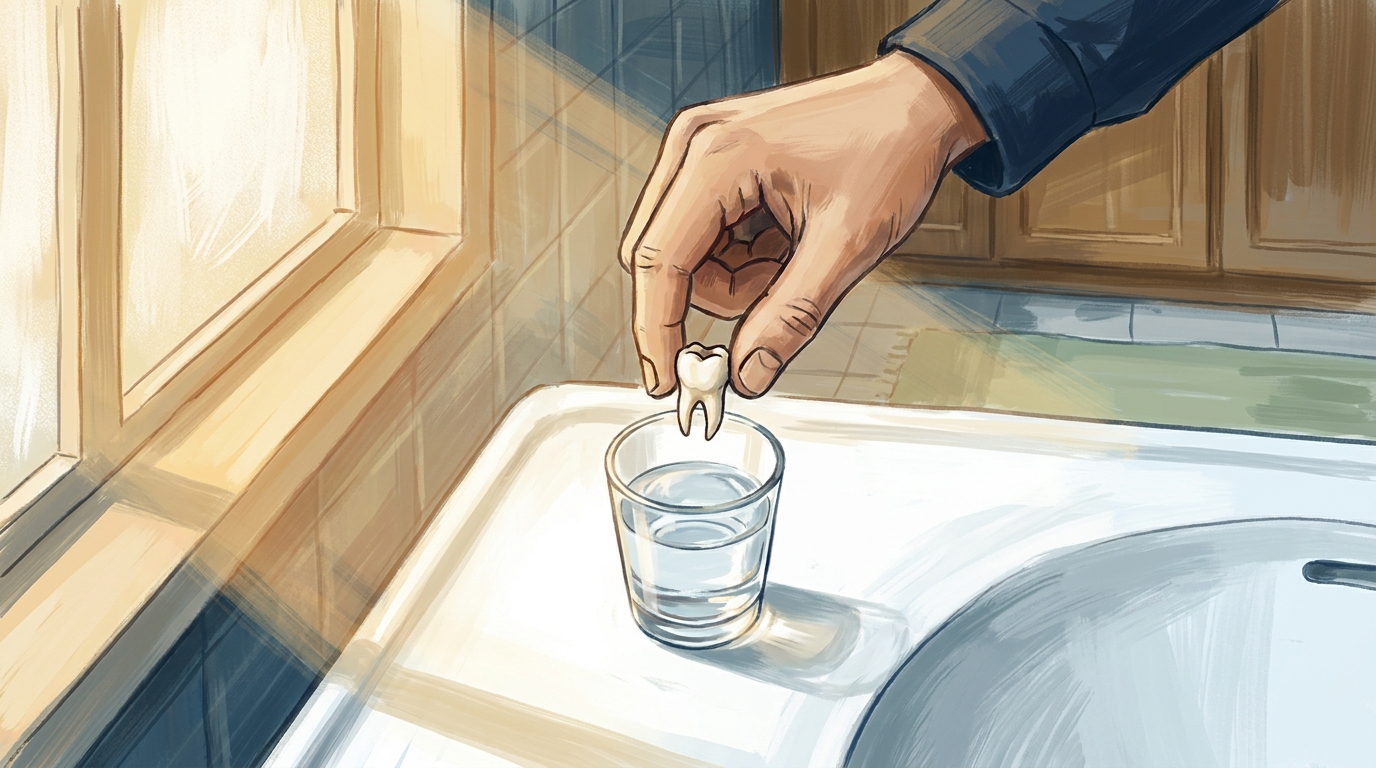
If a permanent tooth has just been knocked out in Irvine, CA, pick it up by the white crown — never the root — rinse it gently with water, and either slip it back into the socket or drop it into a cup of milk while you call a dentist. If a tooth is cracked, rinse your mouth with warm water, put a cold compress on your cheek to limit swelling, and get seen the same day. The first 60 minutes are the window that decides what happens next.
Dental trauma rarely happens in a convenient place. It happens at a soccer game at Great Park, on a bike path through Woodbridge, on the pickleball courts, or on the drive home down Jeffrey Road when a car stops short. The steps below are what we would want any patient to do between the moment of injury and the moment they reach a dentist's chair.
What should you do in the first 60 minutes after a knocked-out tooth in Irvine, CA?
Handle the tooth by the crown only, rinse the root briefly with water without scrubbing, and try to reinsert it into the socket. If reinsertion isn't possible, keep the tooth moist in milk, between the cheek and gums, or in an ADA-accepted tooth preservation product, and get to a dentist immediately. The sooner it's reimplanted, the better the chance the tooth re-embeds in the gum.
A knocked-out or displaced permanent tooth is classified as a dental emergency. Speed matters because the cells on the root surface start to die quickly once the tooth is out of the mouth. When you rinse the root, use water only — do not scrub it, and do not remove any attached tissue fragments, because those fibers are part of what lets the tooth reattach.
At Rice Dentistry, our Irvine, CA team treats trauma visits as same-day priorities, and most dentists reserve time in their daily schedules for emergency patients. Call while someone else drives. Give the receptionist specifics: which tooth, how long ago, whether it's in milk, whether there's bleeding or a facial injury. That phone call is what gets a chair ready before you walk in.
How should you store a knocked-out tooth on the way to the dentist?
Keep the tooth moist at all times. The American Dental Association recommends the socket itself, between the cheek and gums, cold milk, or an ADA-accepted tooth preservation product.
Milk is usually the most realistic storage medium in a real Irvine, CA emergency because it's in most refrigerators and in nearly every gas station between the Spectrum and the 405. The cheek-and-gums option works for cooperative older patients but is not safe for young children who might swallow the tooth.
| Storage option | Good choice when | Notes |
|---|---|---|
| Back in the socket | The tooth is clean and the patient is calm | Best outcome; hold in place by biting gently on gauze |
| Cold milk | Reinsertion isn't possible | Most practical real-world option |
| Cheek and gums | Adult or older child, no swallowing risk | Keeps the tooth bathed in saliva |
| ADA-accepted preservation kit | You keep one in a first-aid kit | Designed for exactly this moment |
| Salt water (pinch of salt) | Milk and kits aren't available | Better than plain water |
What's different if a baby tooth is knocked out?
Never try to reinsert a knocked-out baby tooth. Pushing a primary tooth back into the socket can damage the adult tooth developing underneath. Instead, control any bleeding with gentle pressure, keep the child calm, and call a dentist the same day to confirm no fragments remain and that the permanent tooth bud is undisturbed.
Parents are often rattled because the mouth bleeds more than the injury warrants. That's normal. The clinical priority with a child is the socket and the developing tooth above it, not the baby tooth itself.
What should you do for a cracked or broken tooth?
For a cracked tooth, the American Dental Association advises rinsing your mouth immediately with warm water and applying cold compresses to the outside of the face to keep swelling down. If the tooth is bleeding, apply gauze to the area until the bleeding stops. Then get a dental assessment the same day — a badly cracked tooth is a dental emergency.
Cracked teeth can range from minor surface cracks to more serious fractures requiring immediate care.
Front-tooth cracks are usually what bring a patient in — they're visible, and they tend to be sharp against the tongue. Molar cracks are easier to miss until biting pressure makes them obvious.
Two things not to do: do not place aspirin or any painkiller against the gums or tooth, because it can burn the gum tissue; and do not wait and see on a tooth that's loose, badly broken, or bleeding significantly.
Dentist's office or emergency room?
For most dental trauma — knocked-out tooth, cracked tooth, broken crown — a dental office is the right destination, not the ER. Go directly to the emergency room when there are broken facial bones, bleeding that won't stop, uncontrolled pain, or loss of consciousness. Hospitals in Orange County can stabilize facial trauma; they generally cannot replant a tooth.
A dental emergency is any dental problem requiring immediate attention, including bleeding that won't stop, pain that doesn't improve with medication, or broken facial bones. A chipped tooth with no pain and no sharp edge isn't an emergency and can wait for a scheduled appointment.
What happens once you get to the dentist?
For a replanted knocked-out tooth, the dentist typically splints it to the teeth on either side for about 2 weeks to hold it in position while the periodontal ligament reattaches.
Rice Dentistry has been serving patients in and around Orange County since 1987, and the practice offers reconstructive services including dental crowns and bridges, dental implants, and full mouth reconstruction when a tooth cannot be saved. Sedation options including oral conscious sedation and nitrous oxide are available for patients who are anxious after a traumatic injury.
"You cannot find a better dental practice in Southern CA. Period. Drs. Taylor and Scott Rice are skilled artists. I couldn’t be happier."
Frequently asked questions
How long do I have to save a knocked-out permanent tooth?
Minutes matter. The sooner a knocked-out permanent tooth is reimplanted, the more likely it is to re-embed in the gum. Pick the tooth up by the crown, rinse the root with water without scrubbing, and either slip it back into the socket or store it in milk while you call a dentist. Treat the first hour as the critical window.
Can I put the tooth back in myself?
Yes, if it's an adult tooth and the patient is calm enough to cooperate. Hold the tooth by the white crown, rinse the root gently with water, don't scrub it, and don't remove tissue fragments attached to the root. Slide it into the empty socket in the correct orientation and bite gently on clean gauze to hold it there until you reach a dentist.
What if it's my child's baby tooth?
Do not reinsert a baby tooth. Pushing a primary tooth back into the socket can damage the permanent tooth developing underneath. Apply gentle pressure with gauze to control bleeding, keep your child calm, and call a dentist the same day so the socket can be examined and the underlying permanent tooth bud evaluated.
Is milk really better than water for storing the tooth?
Yes. Plain water damages the delicate cells on the root surface, while milk keeps them viable long enough for a dentist to replant the tooth. If milk isn't available, use an ADA-accepted tooth preservation product, hold the tooth between the cheek and gums (adults only), or use a cup of water with a pinch of table salt.
Should I go to the ER or a dentist for a cracked tooth?
Go to a dentist for a cracked tooth. For most tooth trauma, a dental office is where treatment actually happens. The emergency room is the right choice only if there are broken facial bones, bleeding that won't stop, uncontrolled pain, or loss of consciousness. A badly cracked tooth is a dental emergency and should be seen the same day.
Can I take a painkiller while I wait?
You can take an oral painkiller as directed on the label, but never place aspirin or any painkiller directly against the gums or tooth — it can burn the gum tissue. For swelling and comfort, apply a cold compress to the outside of the face and rinse your mouth with warm water until you're seen.
Can I just call in the morning if it happened at night?
For a knocked-out permanent tooth, no — the longer you wait, the lower the chance it will reattach. For a badly cracked, loose, or painful tooth, same-day care is also the goal. A chipped tooth that isn't painful and has no sharp edges can wait until the dental office opens for a routine appointment.
A calm plan beats a panicked one
Dental trauma is one of the few medical situations where what you do in the first few minutes genuinely changes the outcome. Handle the tooth by the crown, keep it moist, protect a child's developing adult tooth by never reinserting a baby tooth, and call a dentist before you drive. Readers in Irvine, CA who want this handled professionally can reach Rice Dentistry at (949) 551-5902 or https://irvinedentalcare.com to get seen quickly and plan what comes next.