Veneers vs Crowns for a Chipped Front Tooth in Irvine, CA
Chipped a front tooth in Irvine? Here's the honest truth about veneers vs crowns — when each is right, what myths to ignore, and how to decide in 2026.
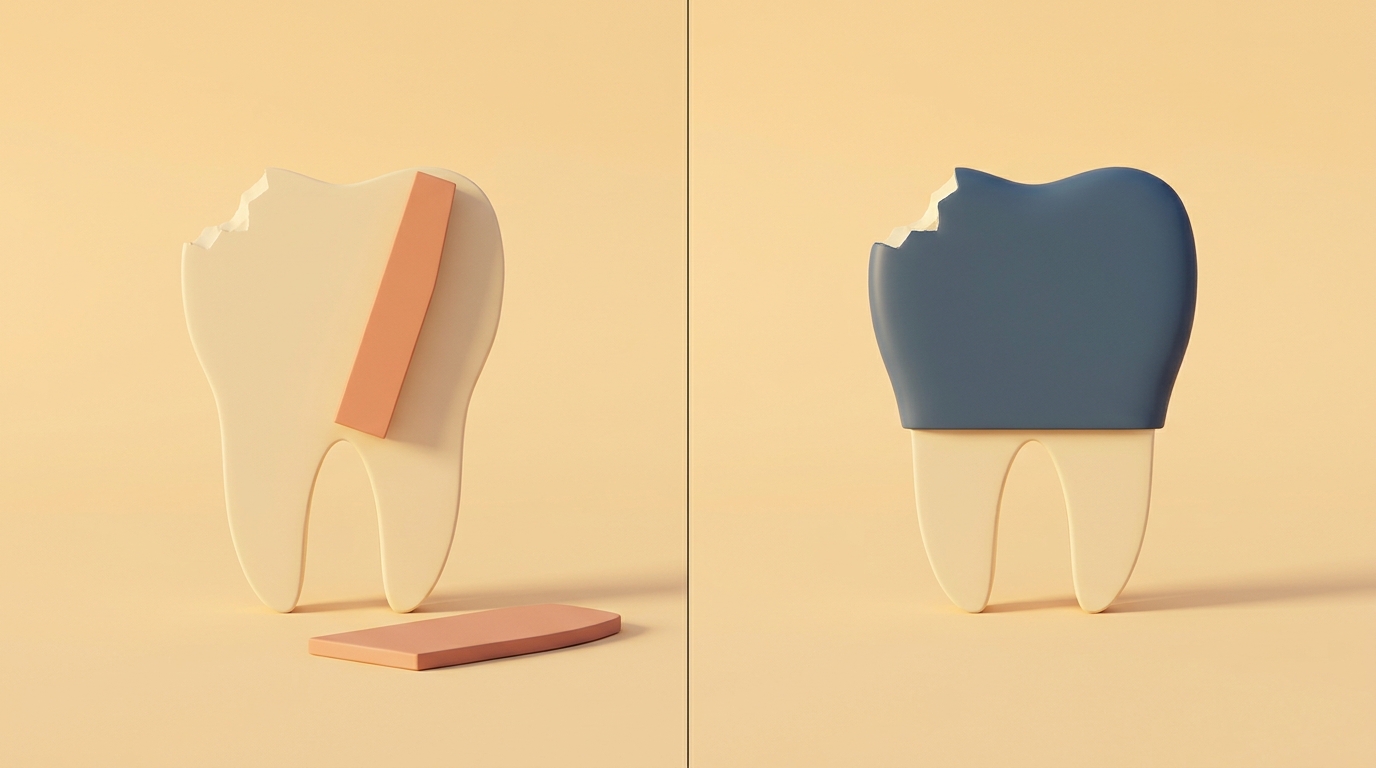
For a small chip on an otherwise healthy front tooth, a porcelain veneer is usually the more conservative cosmetic choice, while a full crown is reserved for teeth that are extensively broken, decayed, or structurally weakened. The popular belief that "a chipped tooth needs a crown" is often wrong — crowns remove far more tooth structure than a chip typically warrants, and in many Irvine cases, smoothing, composite bonding, or a single veneer solves the problem with less intervention.
That said, the opposite myth — that veneers are a harmless, reversible beauty treatment — is equally misleading. The right answer depends on how much tooth is left, how your bite loads that front tooth, and whether anything underneath the enamel needs attention first. Here's what actually holds up clinically, and how patients in Irvine should think it through.
Is a veneer or a crown the right fix for a chipped front tooth in 2026?
For a chip limited to the visible front surface of a structurally sound tooth, a porcelain veneer is typically the appropriate restoration, and in minor cases composite bonding or simple smoothing may be enough. A crown becomes the right call when the tooth is broken below the gumline, weakened by a large filling or decay, or needs full circumferential protection — because veneers cover only the front surface of a tooth, while crowns encase the entire tooth structure.
At Rice Dentistry in Irvine, this distinction drives the first conversation with any patient who walks in with a chipped front tooth. The chip itself is rarely the whole story — the condition of the enamel around it, the way the upper and lower teeth meet, and whether the pulp was jolted by the trauma all shape the recommendation.
Myth #1: "A chipped front tooth automatically needs a crown"
This is the most common misconception, and it's wrong for most front-tooth chips. Crowns cover the entire tooth and require significant reduction on all surfaces; a veneer covers only the front surface and is placed after the dentist removes a small amount of enamel from the front and sides. For a chip that hasn't compromised the tooth's structural core, a crown is overtreatment.
Why the myth persists: crowns genuinely are the right answer for molars and for front teeth that have been through root canals, large fillings, or severe fractures. The error is generalizing that logic to every chip. A thumbnail-sized corner chip on a sound incisor and a tooth broken diagonally to the gumline are not the same clinical problem, and they shouldn't get the same treatment.
Myth #2: "Veneers ruin your natural teeth"
The partial truth here is important. Veneer treatment is not reversible, because enamel is removed to place the veneer and enamel does not grow back. That's a real, permanent trade-off patients should understand before consenting. But "ruin" overstates it: porcelain veneers are custom-made thin shells designed to bond to and function like natural enamel, and the amount of enamel removed for a properly planned porcelain veneer is small — typically from the front and sides only.
The honest framing: a veneer is a lifetime commitment to maintaining a restoration on that tooth. If a veneer eventually chips, cracks, wears down, or loosens, your dentist will need to re-bond, repair, or replace it. That's maintenance, not ruin — but it is a decision you can't take back, which is why the consultation matters more than the procedure.
Myth #3: "Veneers last forever"
They don't, and no ethical dentist will promise they will. Dental crowns typically last many years, with longevity depending on the tooth, the bite, and home care.
What those figures actually mean for an Irvine patient: a well-placed porcelain veneer on a front tooth, cared for properly, has a strong chance of lasting a decade or more before needing attention. But "strong chance" is population-level data, not a guarantee about your specific tooth. Grinding habits, bite forces, diet, and hygiene all move the needle.
When a crown really is the right answer
A crown is the appropriate restoration when a front tooth has lost significant structure, has a large existing filling, has undergone or needs root canal treatment, or has fractured in a way that compromises its ability to withstand normal biting forces. After root canal treatment, the tooth is restored with a crown or filling for protection — and for a front tooth that's been endodontically treated, a crown is often the durable choice.
There's an under-discussed point here: trauma to a tooth may cause pulp damage even if the tooth has no visible chips or cracks. A hard knock to a front tooth — a sports collision, a fall, a steering-wheel impact — can inflame or kill the pulp months later, even if the visible chip looks minor. That's why a "small chip" exam should always include a pulp assessment, not just a cosmetic quote.
Veneers vs crowns at a glance
| Factor | Porcelain Veneer | Dental Crown |
|---|---|---|
| Coverage | Front surface only | Entire tooth |
| Enamel removal | Small amount from front and sides | Significant reduction on all surfaces |
| Best for | Chipped, stained, crooked or misshapen front teeth | Teeth with major structural loss, large fillings, or post–root canal |
| Reversibility | Not reversible (enamel removed) | Not reversible |
| Reported longevity | ~93.5% survival at 10 years; ~83% at 20 years | Generally 5–15 years; some last longer |
| Insurance | Cosmetic — often not covered unless medically necessary | More often covered when medically necessary |
Who is not a good candidate for veneers?
Veneers may not be a good choice for patients who clench or grind their teeth or have a deep overbite — the forces involved can chip or dislodge porcelain faster than it should fail. A dentist must also treat any decay or gum disease before placing veneers, because placing veneers over unhealthy teeth may worsen existing dental problems.
This matters for Irvine patients for a specific reason: nighttime grinding (bruxism) is widespread among adults in high-demand work environments, and the surrounding business corridors are full of exactly that demographic. If you suspect you grind, that conversation needs to happen before veneers are planned, not after.
What about composite bonding as a middle path?
Composite bonding deserves honest mention. Composite veneers may require less tooth enamel to be removed and fewer visits to the dentist compared to porcelain, and are easier to fix if damaged — but they aren't as stain- or wear-resistant as porcelain. For a small front-tooth chip, composite is often the right starting point, especially for younger patients or anyone who wants to preserve maximum enamel.
Rice Dentistry's cosmetic menu reflects this spectrum — porcelain veneers, hybrid veneers, BioClear, and composite bonding — so that the fix matches the chip rather than the other way around.
How Irvine patients should approach the decision
Rice Dentistry has served patients in and around Orange County since 1987, from its office on Laguna Canyon Road near the Irvine Spectrum, and the same decision framework applies to nearly every chipped-front-tooth consultation: confirm the tooth is healthy underneath, assess the bite, present the least-invasive option that will actually hold, and let the patient weigh the trade-offs with real information.
Dr. Scott Rice has 40 years of experience practicing dentistry and holds certifications spanning Invisalign, oral sedation, laser dentistry, and DSD Digital Smile Design — the kind of cross-training that matters when the question is whether a chip is a cosmetic case, an occlusion case, or something more. Rice Dentistry offers both in-person and virtual consultations, which can be useful for a first look at a chipped tooth before committing to an office visit.
One practical note: veneers are considered cosmetic dentistry, so a veneer may not be covered by insurance unless it is deemed medically necessary. Crowns are more frequently covered when there's a clear structural reason. Verify your benefits as part of the planning conversation.
Frequently Asked Questions
Do veneers ruin your natural teeth?
No, but the treatment is permanent. Placing a porcelain veneer requires removing a small amount of enamel from the front and sides of the tooth, and enamel does not regrow — so the tooth will always need some form of restoration going forward. That's a meaningful commitment, but it's not the same as damaging or destroying the tooth, which remains vital and functional underneath the veneer.
How long do porcelain veneers last?
In practical terms, a well-made porcelain veneer on a front tooth frequently lasts a decade or longer with proper care. These are population-level figures, however — longevity in any individual case depends on bite forces, grinding, diet, and hygiene.
Is a crown always stronger than a veneer for a front tooth?
A crown covers the entire tooth and is structurally more protective, which is why crowns are preferred for teeth with major fractures, large fillings, or after root canal treatment. For a sound front tooth with a small chip, a crown is usually overtreatment — the veneer provides adequate strength for the cosmetic area without sacrificing healthy tooth structure on all surfaces.
Will insurance cover veneers or crowns for a chipped tooth?
Veneers are considered cosmetic dentistry and often aren't covered unless deemed medically necessary. Crowns are more commonly covered when there's a clear structural reason — such as a large fracture, extensive decay, or a tooth that has had root canal treatment. Coverage varies significantly by plan, so verify benefits before treatment is scheduled rather than after.
Can I get a veneer if I grind my teeth at night?
Veneers may not be a good choice if you clench or grind your teeth or have a deep overbite, because those forces can chip or dislodge porcelain. That doesn't automatically rule veneers out, but it does mean a nightguard, bite adjustment, or alternative restoration may need to be part of the plan. An honest bite evaluation before treatment is essential.
What should I do right after chipping a front tooth?
Save any fragment if you can, rinse with warm water, and book a dental exam promptly — even if the chip looks minor and doesn't hurt. Trauma to a tooth may cause pulp damage even when there is no visible chip or crack, so a professional assessment should include both the cosmetic question and a check that the tooth's nerve is healthy.
The bottom line for Irvine patients
A chipped front tooth doesn't need a crown by default — and it doesn't need a veneer by default either. The right restoration depends on how much of the tooth is actually compromised, how your bite behaves, and whether anything underneath needs attention first. The most useful thing you can do is get an in-person evaluation before committing to either path, because the decision isn't reversible once enamel comes off.
Readers in Irvine who want this looked at professionally can reach Rice Dentistry at (949) 551-5902 or https://irvinedentalcare.com to arrange a consultation at the Laguna Canyon Road office.