Is Sedation Dentistry Safe for Seniors in Irvine, CA?
A safety-focused look at sedation dentistry for Irvine seniors with heart, blood pressure, or medication concerns — what's safe, what's screened, and why.
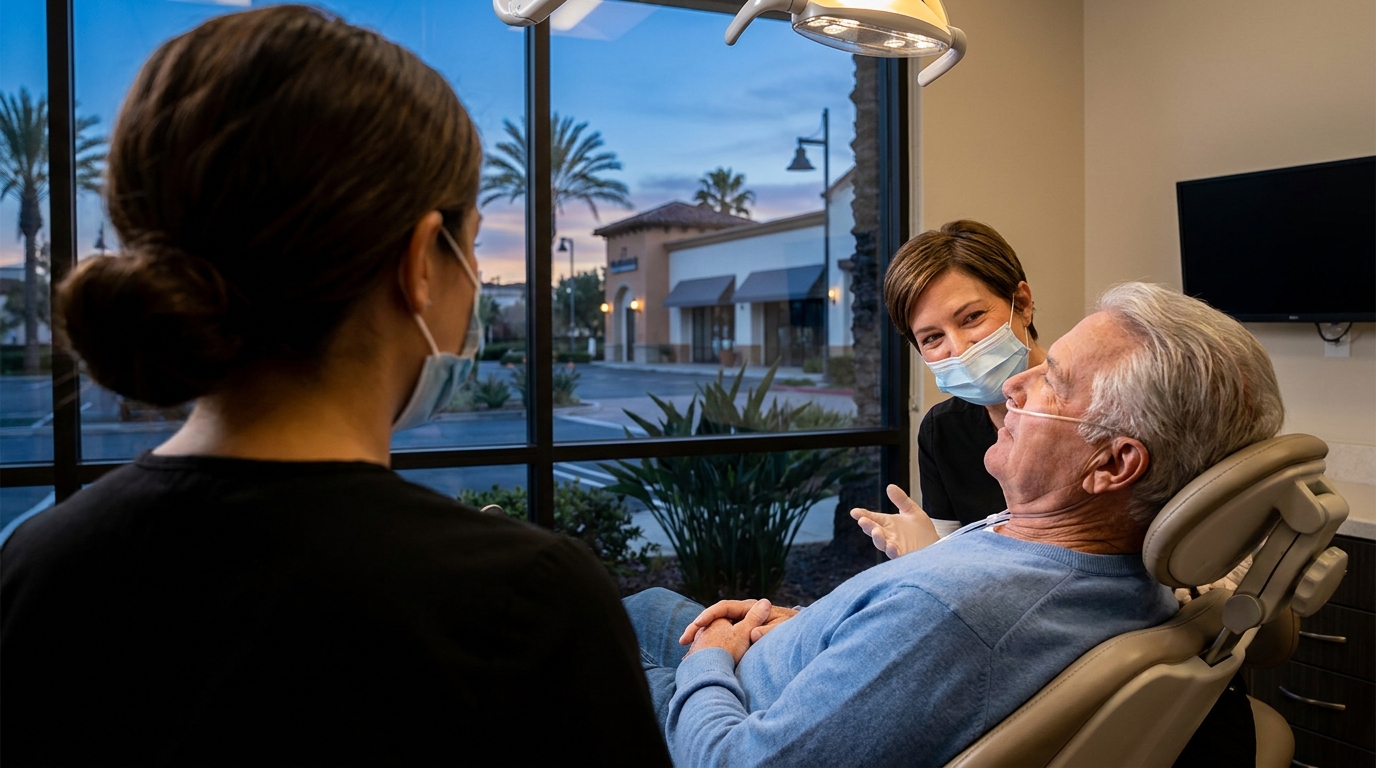
Yes — for most seniors in Irvine, sedation dentistry is safe when the dentist screens medical history carefully, adjusts dosing for age and medications, and monitors vitals throughout the visit. The real safety question isn't age itself; it's how well the practice coordinates with the patient's physician and matches the sedation level to the patient's health profile.
That distinction matters here. Irvine and the surrounding Orange County corridor — from Woodbridge and Turtle Rock down to Laguna Woods and the retirement communities near Leisure World — hold one of California's densest populations of adults 65 and older. Many of these patients take blood thinners, beta-blockers, or CPAP therapy home with them at night. Sedation dentistry can absolutely accommodate them. It just has to be done thoughtfully.
Is sedation dentistry safe for seniors with health conditions in Irvine?
For medically stable seniors, sedation dentistry is considered safe when performed by a dentist trained and permitted in sedation by the Dental Board of California. Risk rises with uncontrolled heart disease, severe sleep apnea, recent stroke, or certain drug interactions — all of which are identified during pre-sedation screening and either managed, modified, or referred out.
The American Dental Association classifies minimal and moderate sedation as low-risk procedures for ASA I and ASA II patients — those who are healthy or have mild, well-controlled systemic disease. Many Irvine seniors fall into ASA II. ASA III patients (moderate systemic disease, like poorly controlled diabetes or symptomatic heart conditions) require more caution, often a lighter sedation choice, and sometimes a physician clearance letter before treatment.
At Rice Dentistry in Irvine, this screening is where safety actually lives. Before any sedation appointment, we review your full medication list, recent labs if relevant, cardiac history, and airway anatomy — because a 78-year-old on Eliquis with mild sleep apnea needs a very different plan than a 62-year-old with only seasonal allergies.
What types of sedation dentistry are safest for older adults?
For seniors, nitrous oxide (laughing gas) and low-dose oral sedation are typically the safest options because they wear off quickly, preserve protective reflexes, and are easier to titrate. IV sedation is safe too but requires more monitoring. General anesthesia is reserved for specific cases and usually performed in a surgical setting rather than a standard dental operatory.
| Sedation Type | Typical Senior Suitability | Recovery Time | Key Safety Note |
|---|---|---|---|
| Nitrous oxide | High — most seniors tolerate well | 5–10 minutes | Avoid with severe COPD or recent ear surgery |
| Oral conscious sedation | Moderate–high with dose adjustment | 4–6 hours; ride home required | Screen for benzodiazepine interactions |
| IV sedation | Case-by-case; requires permit | 6–24 hours | Continuous pulse-ox and BP monitoring |
| General anesthesia | Rare in-office; usually referred | 24+ hours | Cardiac and airway clearance typically required |
Which one is right for you depends on the procedure length, your anxiety level, your medications, and your airway. A single crown replacement with mild anxiety often needs only nitrous. Full-mouth restoration with dental phobia may justify oral or IV sedation. We walk through this decision individually — there is no default answer for a senior patient.
What health conditions require extra caution before sedation?
Sedation dentistry requires additional screening — and sometimes a physician consult — for seniors with obstructive sleep apnea, congestive heart failure, uncontrolled hypertension, recent cardiac events within six months, advanced kidney or liver disease, or those taking multiple CNS depressants. These conditions don't automatically disqualify you; they change which sedation option is chosen and how you're monitored.
Blood thinners like warfarin, Eliquis, or Plavix are common in Irvine's senior population and rarely need to be stopped for sedation itself — but they do affect the surgical portion of the visit. Beta-blockers can blunt the body's response to epinephrine in local anesthetic, so dosing is adjusted. CPAP users bring their machine on IV sedation days. These are routine accommodations, not obstacles.
Polypharmacy — being on five or more prescriptions — is the single most common complicating factor we see in patients over 70. It's why a thorough medication review is non-negotiable before any sedation appointment.
How is safety monitored during and after the appointment?
During sedation, California law requires continuous monitoring of oxygen saturation, blood pressure, heart rate, and respiration for moderate and deep sedation, with equipment and trained personnel specified by the Dental Board of California's sedation permit rules. After the visit, seniors need a responsible adult driver, a quiet recovery environment, and clear post-op instructions written in plain language.
In our practice, monitoring for oral and IV sedation includes pulse oximetry, automated blood pressure cuffs, and a team member whose sole job during sedation is watching the patient — not assisting the dentist. Recovery is unhurried. We don't discharge a senior until vitals are stable and a family member or caregiver is physically present to accompany them home.
For patients coming from farther south — Laguna Woods, Aliso Viejo, or Mission Viejo — we schedule sedation appointments earlier in the day to avoid afternoon I-405 traffic on the way home, which matters when you're groggy in the passenger seat.
How much does sedation dentistry cost for seniors in Irvine in 2026?
In Irvine, expect nitrous oxide to run roughly $75–$150 per visit, oral conscious sedation around $250–$500, and IV sedation between $500 and $1,000 per hour as of 2026. Medicare does not cover routine dental sedation, but some Medicare Advantage plans and private supplemental dental insurance offer partial benefits, particularly when sedation is medically necessary.
Cost shouldn't be the deciding factor in a senior's sedation choice — safety and appropriateness should. That said, we discuss fees openly before treatment and help patients understand what their specific plan covers. Rice Dentistry holds a 5-star rating across 573 Google reviews, and one recurring theme from long-term patients is that pricing and options are explained clearly up front, without surprises at checkout.
Frequently Asked Questions
Can an 80-year-old safely receive dental sedation?
Yes, many patients in their 80s safely receive sedation dentistry, particularly nitrous oxide or carefully dosed oral sedation. Age alone is not a disqualifier — overall health, medications, and airway status matter far more. A thorough pre-sedation evaluation and, where appropriate, a brief consult with the patient's primary physician establish whether sedation is appropriate and which type is safest.
Does sedation dentistry interact with blood thinners?
Sedation medications themselves do not typically interact with blood thinners like warfarin, Eliquis, or Plavix. The interaction concern is with the dental procedure — bleeding risk — not the sedation. Most seniors continue their blood thinners as prescribed. Your dentist coordinates with your cardiologist or primary care physician when the procedure involves extractions or significant surgery.
Do I need clearance from my doctor before sedation dentistry?
Medical clearance is recommended for seniors with significant cardiac history, recent hospitalization, uncontrolled diabetes, moderate-to-severe sleep apnea, or complex medication regimens. Healthy seniors with well-controlled conditions usually do not need a separate clearance letter. Your dentist will tell you during the pre-sedation consultation whether a physician's note is required based on your specific health profile.
Is IV sedation safe for seniors with heart conditions?
IV sedation can be safe for seniors with stable, well-controlled heart conditions, but it requires continuous monitoring of blood pressure, oxygen, and heart rhythm, and often physician clearance. Patients with recent heart attacks, unstable angina, or severe congestive heart failure are typically better candidates for lighter sedation like nitrous oxide, or for treatment in a hospital-based dental setting.
How long does it take to recover from dental sedation as a senior?
Recovery time depends on the sedation type. Nitrous oxide wears off within 5 to 10 minutes and patients can drive home. Oral sedation requires 4 to 6 hours of grogginess and a driver. IV sedation may leave you drowsy for the rest of the day, with full alertness returning in 24 hours. Seniors sometimes take slightly longer to fully clear medications.
Will Medicare cover sedation dentistry in Irvine?
Original Medicare (Parts A and B) generally does not cover routine dental sedation. Some Medicare Advantage plans include dental benefits that may cover sedation partially, especially when medically necessary — for example, for patients unable to tolerate treatment otherwise. Coverage varies significantly by plan, so verify benefits with your carrier before scheduling. Your dental office can often help confirm coverage.
The bottom line for Irvine seniors
Sedation dentistry is safe for the great majority of Irvine seniors — including those with common conditions like controlled hypertension, mild sleep apnea, or blood thinner regimens — provided the practice screens thoroughly, chooses the right sedation level, and monitors carefully. The risks worth taking seriously are the ones that come from skipping steps, not from the sedation itself.
Readers in Irvine who want a careful, senior-appropriate approach to sedation dentistry can reach Rice Dentistry at https://irvinedentalcare.com to schedule a consultation and medication review before any treatment is planned.