Scared of the Dentist? Major Dental Work in Irvine, CA
Dental anxiety keeping you from major work in Irvine? Here's how sedation dentistry — nitrous, oral, and IV options — makes complex care manageable.

If you're too scared to go to the dentist but need major dental work in Irvine, CA, the practical path forward is sedation dentistry — nitrous oxide, oral conscious sedation, or IV moderate sedation — administered by a provider licensed under California's dental anesthesia rules. Sedation lets you complete crowns, implants, extractions, or full-mouth rehabilitation in fewer, calmer visits, often with little memory of the appointment. Start by booking a consultation with a sedation-experienced Irvine dentist who can match the modality to your health history and treatment plan.
Why does dental anxiety keep patients from getting major work done?
Dental anxiety is a self-reinforcing cycle: fear delays care, delay allows small problems to become root canals or extractions, and the more invasive the eventual treatment, the more the fear compounds. By the time many Irvine patients seek help, they need multiple crowns, implants, or full-arch rehabilitation — exactly the kind of work sedation dentistry was designed to make tolerable.
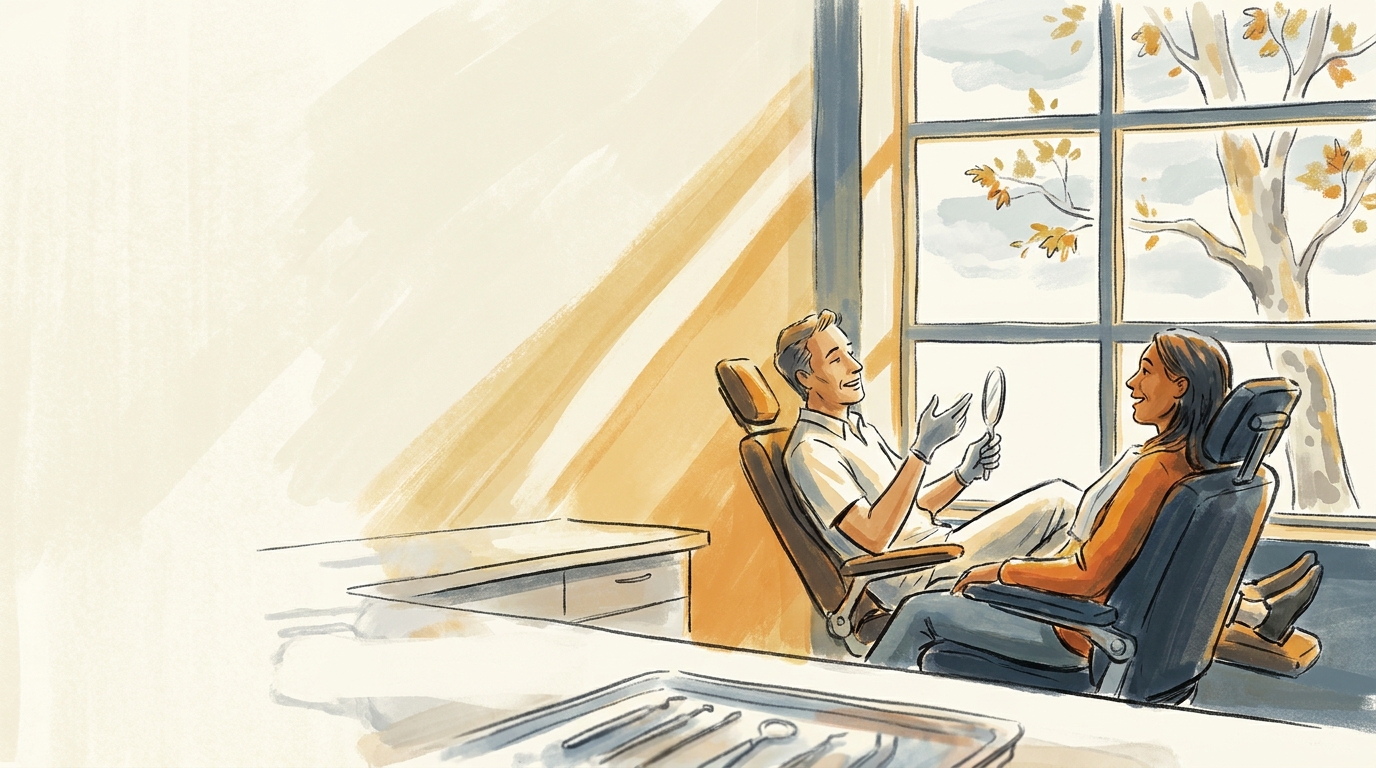
We see this pattern often in Orange County's professional population. Busy schedules, past traumatic dental experiences, and a preference for consolidating care into fewer visits all push patients toward sedation as the only realistic way back into the chair. Rice Dentistry, located in Irvine, works with anxious patients who have deferred dental care — sometimes for a decade or longer — and need a plan that respects both the clinical complexity and the emotional weight of returning.
What sedation options are available for fearful patients in Irvine, CA?
Irvine patients have three main sedation modalities: nitrous oxide (laughing gas) for mild anxiety and shorter procedures, oral conscious sedation (a pill taken before the appointment) for moderate anxiety and longer visits, and IV moderate sedation for severe phobia or complex multi-procedure cases. Deep sedation and general anesthesia are available through oral surgeons or practices contracting with a CRNA or anesthesiologist.
Nitrous oxide
Inhaled through a small nose mask, nitrous takes effect within minutes and wears off almost immediately after the mask is removed. You stay awake and responsive, you can drive yourself home, and the cost typically runs $50 to $150 per visit in the Irvine market. It's the entry-level option for patients whose anxiety is real but manageable.
Oral conscious sedation
You take a prescribed sedative (commonly a benzodiazepine) about an hour before the appointment. You remain conscious and able to respond, but deeply relaxed — most patients remember little of the procedure. Oral sedation runs roughly $150 to $500 per appointment locally and is a strong fit for patients who fear the dental setting itself, not just the drill.
IV moderate sedation
Medication delivered through an IV line allows the provider to adjust depth in real time — the reason it's often called titratable, reversible sedation. Irvine pricing generally lands between $500 and $1,500 or more per visit, often billed in 15-minute units in the $59 to $128.50 range. IV sedation is the practical choice for patients combining severe anxiety with implants, extractions, or multiple crowns in a single visit.
Deep sedation and general anesthesia
Reserved for the highest-acuity cases, deep sedation and general anesthesia run $800 to $3,500 or more per case once the anesthesia specialist and facility fees are added. In California, only dentists holding the appropriate Dental Board of California anesthesia permit — or working with a CRNA or anesthesiologist under state law — may deliver this level of care.
How do California regulations affect who can sedate you?
California has some of the strictest dental anesthesia rules in the country. Business and Professions Code sections 1646–1646.9 govern permit requirements, facility standards, and personnel qualifications for dentists administering general anesthesia or deep sedation. That means not every general dentist in Irvine can legally offer every modality — and it's a legitimate question to ask before you book.
Under California Code of Regulations §1043, certified registered nurse anesthetists (CRNAs) may administer anesthesia ordered by a dentist in an office setting, which is how many Irvine practices offer deeper sedation without holding an in-house general anesthesia permit. The Dental Board of California also expects clinical staff involved in sedation cases to maintain current BLS certification, with ACLS credentials for those directly managing sedated patients. Sedation assistants operate under Business and Professions Code §1752.4, with specific allowable duties defined in §1750.5.
What does sedation dentistry actually cost in Irvine, CA?
Sedation in Irvine sits toward the upper half of national ranges because Orange County's commercial lease, staffing, and malpractice costs are high. Expect $50–$150 for nitrous, $150–$500 for oral sedation, $500–$1,500+ for IV moderate sedation, and $800–$3,500+ for deep sedation or general anesthesia. Dental insurance often covers sedation only partially — or not at all when the indication is anxiety rather than medical necessity.
| Sedation Modality | Typical Irvine Range | Best For |
|---|---|---|
| Nitrous oxide | $50 – $150 per visit | Mild anxiety, shorter procedures |
| Oral conscious sedation | $150 – $500 per appointment | Moderate anxiety, longer visits |
| IV moderate sedation | $500 – $1,500+ per visit | Severe anxiety, multi-procedure days |
| Deep sedation / general anesthesia | $800 – $3,500+ per case | Highest-acuity, medically complex cases |
Ranges are drawn from regional cost data and won't match any single provider's fee schedule exactly. Ask for an itemized quote and verify sedation benefits with your PPO before treatment — most Irvine employers' dental plans reimburse the underlying restorative work more generously than the sedation itself.
How should you choose a sedation dentist in Irvine?
Look for a practice with verifiable sedation experience, current California anesthesia permits or documented CRNA/anesthesiologist arrangements, clinical staff carrying BLS and ACLS credentials, and a track record of treating anxious patients through complex plans. Consultation quality matters as much as credentials — the provider should explain the modality, the monitoring, the recovery, and the cost in plain language before you commit.
When evaluating any sedation dentist, look for patient feedback that speaks specifically to comfort-focused care and compassionate handling of dental anxiety — that kind of firsthand experience matters more than a website's marketing copy when you're choosing someone to sedate you.
What's the step-by-step path back into the chair?
The realistic sequence is: (1) call and disclose your anxiety and treatment history up front; (2) attend a consultation and exam, ideally with nitrous available if needed; (3) review a written treatment plan with sedation options priced out; (4) complete medical clearance if IV or deep sedation is planned; (5) arrange a driver for sedation appointments; (6) complete treatment in as few visits as your plan allows.
- Disclose the fear early. Tell the scheduler you have significant dental anxiety before the first appointment — a sedation-experienced office will pace things differently from that first phone call.
- Start with a low-stakes visit. An exam and imaging appointment, with nitrous available on request, breaks the multi-year avoidance cycle without committing to treatment.
- Get a written plan. Ask for treatment sequenced by visit, with sedation modality and cost identified per appointment.
- Confirm logistics. Oral and IV sedation both require a driver. Arrange the ride when you book, not the morning of.
- Consolidate where clinically appropriate. Combining multiple procedures under a single IV sedation visit is often cheaper and less traumatic than spreading them across five appointments.
Frequently asked questions
Will I be unconscious during sedation dentistry?
Not with nitrous, oral, or IV moderate sedation — you remain conscious and able to respond to the dentist, just deeply relaxed and often with little memory of the procedure afterward. True unconsciousness requires deep sedation or general anesthesia, which in California must be delivered by a permitted dentist, a CRNA, or an anesthesiologist and is reserved for the most complex or medically indicated cases.
Is sedation dentistry safe if I have deferred care for years?
Yes, provided the provider takes a thorough medical history, uses continuous monitoring, and matches the modality to your health status. California requires sedation-involved staff to maintain BLS certification with ACLS for those managing sedated patients, and IV monitoring standards are strict. Disclose every medication, condition, and prior anesthesia experience during the consultation — that conversation, not the sedative itself, is what keeps the appointment safe.
Does dental insurance cover sedation for anxiety in Irvine?
Coverage is limited and inconsistent. Most Irvine-area PPO plans reimburse the underlying restorative procedures (crowns, extractions, implants) fairly well but cover sedation only partially — or not at all when the sole indication is anxiety rather than medical necessity or surgical complexity. Call your carrier with the specific sedation billing codes your dentist provides before treatment, and ask for the out-of-pocket estimate in writing.
How long does IV sedation last, and when can I go back to work?
IV moderate sedation itself is titrated to the length of the procedure — often 1 to 4 hours — but residual drowsiness typically lasts the rest of the day. Plan on a driver for the ride home, no work, no driving, and no important decisions for 24 hours. Most patients feel fully normal by the next morning, though your dentist will give you specific recovery instructions based on the medications used.
Can I get all my dental work done in one visit under sedation?
Often yes, and it's a common request from Irvine patients returning after years of avoidance. IV moderate sedation makes it clinically practical to complete multiple crowns, extractions, or implant placements in a single extended visit, which is why sedation is so useful for full-mouth rehabilitation. The final answer depends on your medical status, the total chair time required, and whether specialists need to be involved.
What if I've had a bad reaction to sedation before?
Bring it up in the consultation before anything else. A prior adverse reaction doesn't automatically rule out sedation — it changes which modality, which medications, and which monitoring level the provider will choose. In some cases the safer path is deep sedation or general anesthesia delivered by an anesthesiologist or CRNA in a properly equipped setting rather than lighter sedation in a general dental office.
Getting started
If fear has kept you away from major dental work, the fix isn't willpower — it's the right sedation plan delivered by a provider who treats anxious patients routinely. Irvine, CA readers who want this handled professionally can reach Rice Dentistry at https://irvinedentalcare.com to schedule a consultation and get a written treatment and sedation plan built around what you actually need.