Sedation Dentistry in Irvine, CA: Will You Feel Anything?
A step-by-step look at what actually happens during sedation dentistry in Irvine, CA — from the first pill to waking up, and what you'll feel.
Under oral conscious sedation, you stay technically awake but drift into a deeply relaxed, drowsy state where you feel no pain, minimal pressure, and little to no memory of the appointment. You'll respond to the dentist if spoken to, but time compresses — a two-hour procedure often feels like fifteen minutes. Local anesthetic still numbs the treatment site, so the sedation handles anxiety and awareness while the numbing handles sensation.
That is the short answer patients in Irvine want before they book. The longer answer — what actually unfolds in the chair, minute by minute — is what most consultation appointments never fully cover. Below is the sequence, the sensations, and the honest tradeoffs.
How does dental sedation work in your body?
Oral sedation uses a prescription benzodiazepine — typically triazolam or diazepam — taken as a pill about an hour before your appointment. The medication suppresses activity in the brain's fear and memory centers, producing calm, drowsiness, and anterograde amnesia. You remain conscious and breathing on your own; you simply stop caring about what's happening around you.
At Rice Dentistry in Irvine, CA, the standard protocol pairs oral sedation with local anesthetic injected once the pill has taken effect — meaning you rarely feel the injection itself, which is what most anxious patients dread. Nitrous oxide (laughing gas) may be layered on top for deeper relaxation during longer procedures. IV sedation is a separate category requiring an anesthesia permit under California Dental Board regulations, and not every practice offers it.
What does the sedation dentistry process look like from start to finish?
The sedation dentistry process runs in six predictable stages: pre-appointment screening, medication intake at home or in-office, monitored onset (30–60 minutes), the procedure itself under continuous vital-sign monitoring, a supervised recovery window, and a chaperoned ride home. Total chair time typically runs 2 to 4 hours depending on the treatment.
Stage 1: The pre-visit
A day or two before, your dentist reviews your medical history, current medications, and any prior reactions to sedatives. You'll get fasting instructions (usually no food six hours prior, clear liquids up to two hours prior) and confirm your driver.
Stage 2: The pill and the wait
You take the sedative either at home 60 minutes before, or in-office in a quiet room. Warmth spreads through your limbs. Your eyelids feel heavy. Sounds soften. This is the window when patients report the anxiety they walked in with simply evaporates.
Stage 3: Getting settled
The team walks you to the operatory — you'll need light support, as your coordination is impaired. A blood pressure cuff, pulse oximeter, and sometimes a capnograph are placed. A blanket goes over you. Local anesthetic is administered; most patients don't remember this step at all.
Stage 4: The procedure
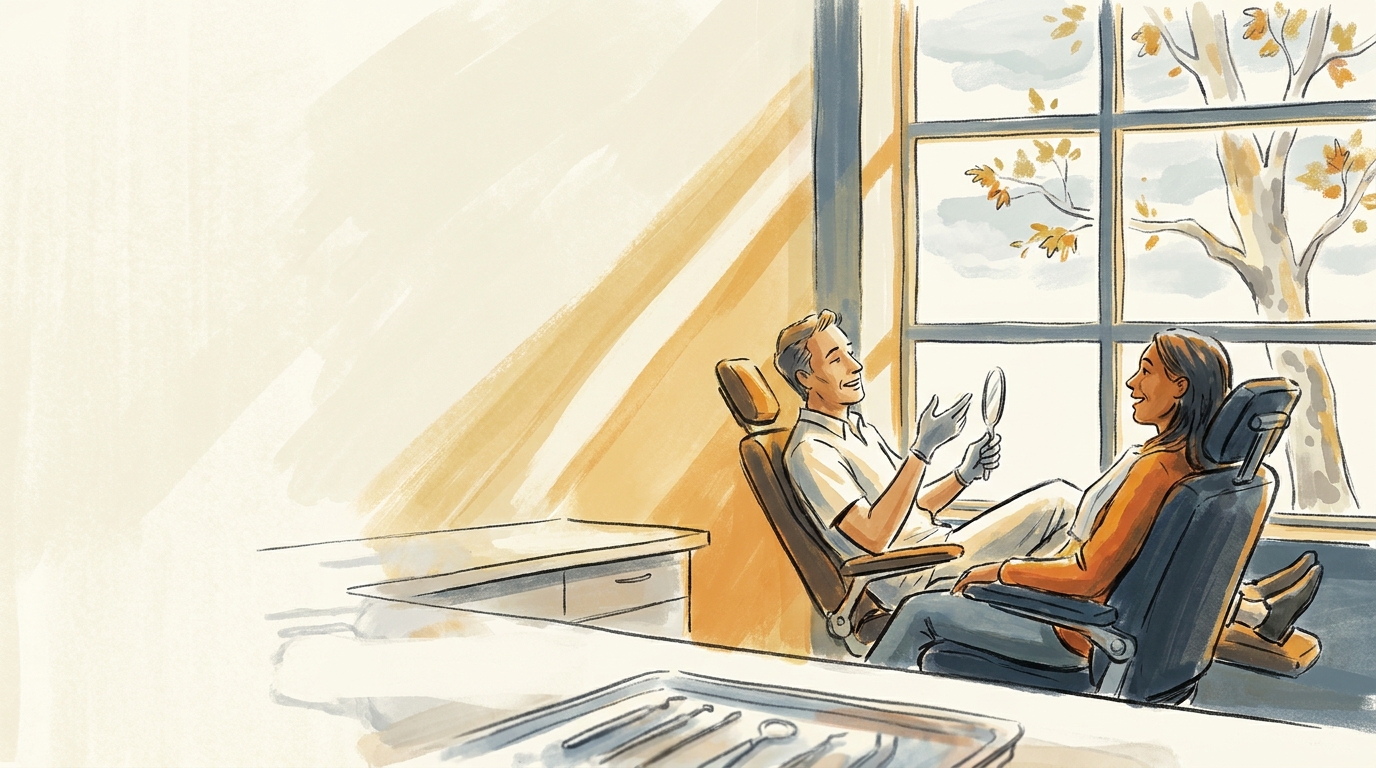
You lie still, breathing normally, occasionally responding to instructions like "open a little wider." You feel pressure and vibration but no sharpness, no pain. Some patients fall into a light sleep; others stay in a dreamy, floating awareness.
Stage 5: Waking up
The medication wears off gradually. You'll feel groggy, possibly a little uncoordinated, for 4 to 8 hours. Full cognitive recovery takes up to 24 hours — no driving, no work decisions, no signing documents.
Do you feel pain under oral sedation?
No — you should not feel pain under properly administered oral sedation combined with local anesthetic. The sedation controls anxiety and awareness; the local anesthetic blocks the pain signal at the nerve. What you may notice is pressure, movement, or the vibration of instruments, but these register as distant, non-threatening sensations rather than discomfort. If a patient ever feels sharpness, the response is immediate — more local anesthetic is administered on the spot.
What will the conscious sedation dentist experience actually feel like?
Most patients describe the conscious sedation dentist experience as "losing an afternoon." You remember sitting down. You may remember a warm blanket. The next clear memory is often being helped to the car. Time collapses. There's no sensation of the procedure having been long, uncomfortable, or frightening — because the brain never encoded it that way. Reviewers of Rice Dentistry describe procedures ending "in less than an hour" and being "painless," which reflects both the sedation and the pacing of the clinical team.
How do sedation options compare in 2026?
| Sedation Type | What You Feel | Awareness Level | Recovery Time | Typical Use |
|---|---|---|---|---|
| Nitrous oxide | Light, floaty, giggly | Fully aware | 5–10 minutes | Cleanings, fillings, mild anxiety |
| Oral conscious sedation | Drowsy, detached, amnesia | Responsive but hazy | 4–24 hours | Crowns, extractions, moderate anxiety |
| IV sedation | Deep relaxation, often no memory | Minimal awareness | 6–24 hours | Implants, complex surgery, severe phobia |
| General anesthesia | Nothing — fully asleep | Unconscious | 24+ hours | Full-mouth reconstruction, special needs |
What safety monitoring happens while you're sedated?
California Dental Board rules require continuous monitoring of oxygen saturation, blood pressure, and heart rate throughout any moderate sedation appointment, along with immediate access to emergency reversal medications like flumazenil. A trained team member is responsible for monitoring — separate from the dentist performing the work. Sedation permits are issued at the provider level, and permit status is publicly verifiable through the Dental Board of California.
For patients in Irvine, CA — particularly those coming from Woodbridge, Turtle Rock, or the University Park area near UC Irvine — this verification is worth doing before any first sedation appointment. Rice Dentistry operates under these state protocols, and its 5-star rating across 573 Google reviews reflects consistent patient reports of feeling safe and cared for through the process. One recent reviewer noted the team's "kindness and professionalism" made a normally dreaded visit "extremely pleasant."
What should you plan for the day of and day after?
Plan for a full 24-hour recovery window. You'll need a licensed adult driver both to and from the appointment — rideshare services are not accepted for sedation discharge under most California dental protocols because a responsible party must physically accept custody. Wear loose clothing. Skip contact lenses. Eat a light meal after the sedation wears off, and avoid alcohol or additional sedatives for 24 hours. Southern California's dry summer air can worsen the cottonmouth side effect, so hydration matters more here than in wetter climates.
Frequently asked questions
Will I be unconscious during oral sedation dentistry?
No. Oral conscious sedation keeps you technically awake and able to respond to verbal cues, breathe on your own, and cough or swallow if needed. You're deeply relaxed and often amnesic — meaning you won't remember much — but you are not unconscious. True unconsciousness requires general anesthesia, which is a separate service category requiring an anesthesiologist or dental anesthesia specialist.
How long does oral sedation take to wear off?
Noticeable grogginess typically lasts 4 to 8 hours after the appointment ends, and full cognitive recovery — the point at which it's safe to drive, work, or make legal decisions — takes up to 24 hours. Metabolism, dose, age, and whether nitrous oxide was layered in all affect the timeline. Most Irvine patients feel essentially normal by the following morning after a good night's sleep.
Can I drive myself home after sedation dentistry?
No. Under California standards of care, any patient who has received oral or IV sedation must be discharged to a responsible adult and cannot legally or safely operate a vehicle for at least 24 hours. Rideshare is generally not accepted as discharge transport for moderate sedation. Arrange a friend or family member before booking — this is the most common scheduling snag for first-time sedation patients.
Is sedation dentistry safe for older adults?
Yes, when properly screened. Older adults metabolize benzodiazepines more slowly, so doses are adjusted downward and recovery is monitored longer. A thorough medical review — current medications, cardiovascular history, kidney and liver function — determines candidacy. Many long-term Rice Dentistry patients in Irvine have used sedation across decades of care, which is one reason the practice sees such extended patient loyalty.
Will I say embarrassing things under sedation?
Unlikely. Oral conscious sedation does not produce the disinhibited chatter people associate with general anesthesia recovery or heavy IV drugs. Most patients are simply quiet and drowsy. You may answer questions slowly or drift off between exchanges, but the "truth serum" trope is largely fictional for the medications used in dental sedation.
How much does sedation dentistry cost in Irvine, CA?
Sedation is priced separately from the dental procedure itself. In Irvine, CA, nitrous oxide typically runs $75–$150 per visit, oral conscious sedation $250–$600, and IV sedation $500–$1,000 or more depending on duration. Dental insurance rarely covers sedation for routine work but often contributes when sedation is medically necessary — for example, for patients with documented dental phobia or special needs.
The bottom line
Sedation dentistry works because it targets the two things that make dental care intolerable for anxious patients: awareness and memory. Handle those, add proper local anesthetic, monitor vitals, and the procedure becomes something that happens to a version of you that isn't really paying attention. Readers in Irvine, CA who want a professional walk-through of their options — or who have put off treatment for years because of fear — can reach Rice Dentistry at https://irvinedentalcare.com to schedule a sedation consultation and review their medical history in detail.