Dental Implant Recovery Timeline in Irvine, CA
What recovery really looks like after dental implant surgery in Irvine — pain, swelling, diet, osseointegration, and milestone check-ins, stage by stage.
Recovery after dental implant surgery in Irvine typically unfolds in two overlapping tracks: a short surface-healing phase of soreness, swelling, and soft-food eating that settles within about a week for uncomplicated cases, and a longer bone-integration phase — called osseointegration — in which the implant fuses to the jawbone over several months before the final crown and unrestricted chewing. How quickly you move through each stage depends on your overall health, whether bone grafting was needed, and how closely you follow your clinician's written post-operative instructions.
The sections below walk through what to expect at each milestone, from the first hours through final restoration, with the local context that matters for scheduling follow-ups and planning time off.
What does the first 24 to 72 hours after implant surgery feel like?
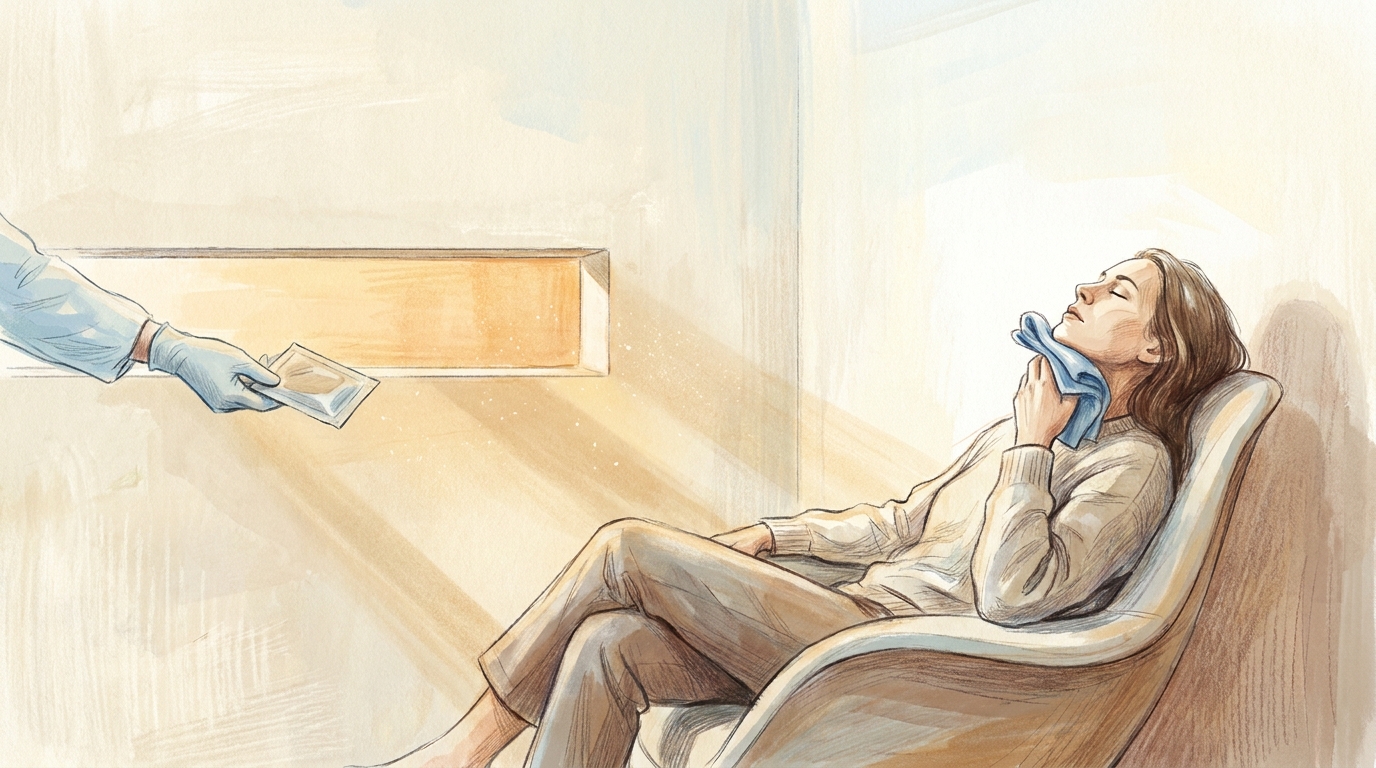
The first 24 to 72 hours are the peak of surface healing: expect numbness as the anesthetic wears off, mild to moderate soreness, visible swelling around the surgical site, and possibly minor bleeding or oozing for the first day. Most patients manage discomfort with the pain plan their surgeon prescribes, cold compresses, and a soft or liquid diet. Rest is the priority — not activity.
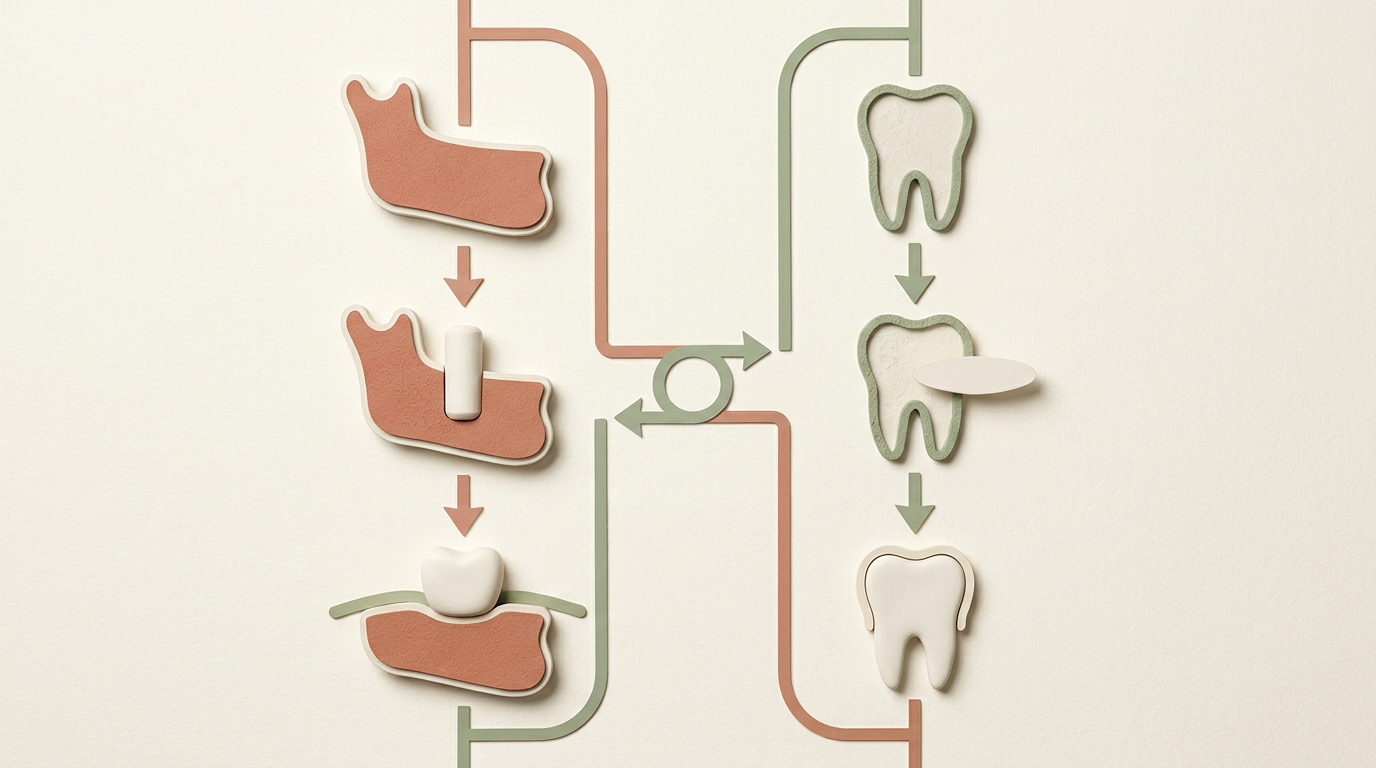
A dental implant is a medical device surgically inserted into the jawbone in place of the tooth's root, with an abutment extending through the gums to support the eventual crown. Because the gum tissue has been opened and the bone prepared to receive the implant body, the body's inflammatory response peaks in the first two to three days. At Rice Dentistry in Irvine, surgical placement is performed by Dr. Nicolas Ravon, a periodontist with dental degrees from Europe and America and a specialist certification in periodontology, which matters because periodontal training is centered on the gum and bone tissues doing the healing.
Practical rules for this window: keep your head elevated when resting, avoid rinsing vigorously, do not use straws, and stick to cool, soft foods. If you were offered sedation — Rice Dentistry provides oral conscious sedation and nitrous oxide — plan for a full day of downtime regardless of how well you feel the next morning.
How painful is getting a dental implant, really?
For most patients, dental implant placement is less painful than expected — comparable to a routine extraction — because the surgery is performed under local anesthesia and often sedation, and the bone itself has no pain receptors. Post-operative discomfort is usually described as soreness and pressure rather than sharp pain, peaks in the first few days, and generally settles within about a week for uncomplicated single-implant cases.
Pain that worsens after day three, rather than improving, is the signal to call your provider. If you notice anything unusual at the surgical site, contact your dental provider right away. The featured review below reflects how pain management is often the first impression patients remember:
⭐️⭐️⭐️⭐️⭐️I can’t say enough good things about this dental office. They not just only delivered the most pain free experience of Novocain injections, but they also completely reconstructed my entire mouth, and throughout the entire process they showed not only skill and precision, but also true integrity in every step they took.
What can you eat during the first two weeks of recovery?
Stick to cool, soft, nutrient-dense foods in the early days of recovery: smoothies (spoon, not straw), yogurt, scrambled eggs, mashed potatoes, soups cooled to warm, oatmeal, blended soups, and well-cooked pasta. Avoid anything crunchy, chewy, spicy, acidic, or hot enough to irritate the surgical site. Chew on the opposite side of your mouth whenever possible.
Nutrition matters because overall health is one of the factors that determines how long it takes to heal after implant placement, according to FDA guidance on dental implants. Protein and hydration support soft-tissue healing in the first two weeks; skipping meals or living on sugary liquids slows it down. Alcohol and smoking should also be off the table — smoking in particular may affect the healing process and decrease the long-term success of a dental implant.
What is osseointegration and how long does it take?
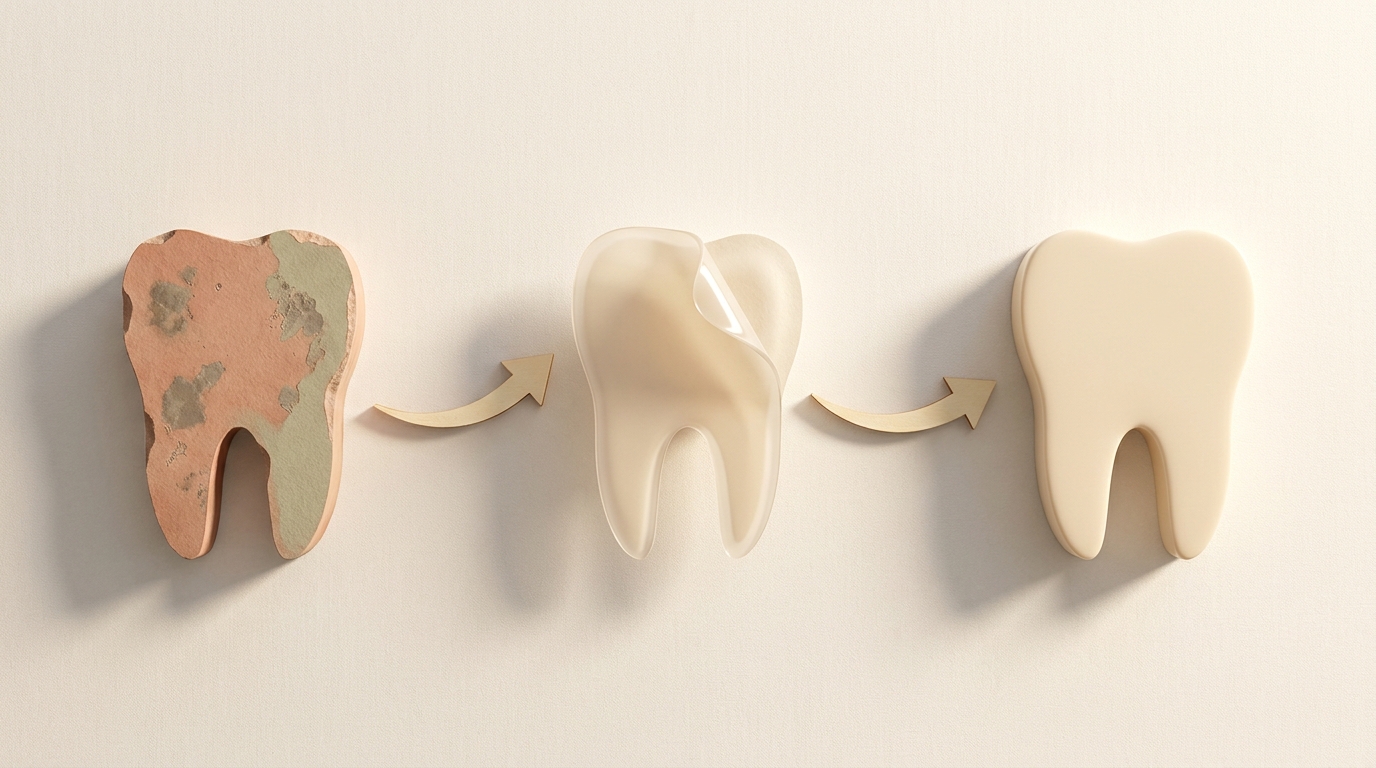
Osseointegration is the biological process by which your jawbone grows into and bonds with the titanium implant body, locking it in place as a stable root replacement. Osseointegration timelines vary by case and can span a period of months before the implant is ready for final restoration. Only after osseointegration is confirmed can the abutment and final crown be placed and the implant loaded with normal chewing forces.
This is the part of recovery that is invisible from the outside. Your gums may look fully healed within two to three weeks, but the bone is still remodeling underneath. During this phase, Rice Dentistry's clinicians use CBCT 3D scanning and advanced 3D surgical design to confirm the implant is tracking correctly before restoration. Rushing a final crown onto an implant that hasn't fully integrated is one of the main pathways to implant failure.
Does bone grafting change the recovery timeline?
Yes — if bone grafting was performed to rebuild volume where a tooth has been missing, additional healing time will be needed before the implant can be placed or restored, depending on the graft's size and location. Advanced techniques such as bone grafting help patients who have experienced some bone loss qualify for dental implants, but the trade-off is a longer, staged timeline.
Bone loss can occur when a tooth is lost, and patients who have been missing teeth for years may need grafting to qualify for implants. If you're being evaluated at Rice Dentistry and a graft is recommended, expect your treatment plan to be sequenced: graft first, heal, then implant placement, then osseointegration, then restoration. The upside is that implants help keep the jawbone from shrinking once they are in place.
Dental implant recovery timeline at a glance
| Stage | Typical duration | What's happening |
|---|---|---|
| Day 0–3 | 72 hours | Peak swelling, soreness, soft/liquid diet, rest |
| Day 4–7 | About 1 week | Discomfort settles for uncomplicated cases; soft foods continue |
| Week 2–4 | 2–4 weeks | Gum tissue closes; first follow-up visit |
| Osseointegration | Several months or longer | Bone bonds with implant body (per FDA guidance) |
| Bone graft (if needed) | +3–6 months | Added before implant placement |
| Final restoration | After integration is confirmed | Abutment and custom crown placed |
Why do post-operative follow-ups matter so much?
Post-operative appointments allow your provider to assess the surgical site for proper wound healing, check for signs of infection, and evaluate how well your body is responding to surgery — complications such as infections or delayed healing may arise even after a patient feels fine. Dental implant complications can occur soon after placement or much later, which is why follow-ups continue through osseointegration, not just the first week.
At Rice Dentistry, restorative dentists Dr. Scott Rice and Dr. Taylor Rice design the custom crowns, bridges, and full-arch teeth that go on top of the implants Dr. Ravon places, so follow-up visits also serve as handoffs between the surgical and restorative phases of your plan. Skipping these check-ins is the quiet way minor issues become chronic ones.
What's recovery like for Irvine patients specifically?
Irvine's mild, dry climate is forgiving for post-surgical healing — there's no humidity surge or freeze event to work around — but local scheduling realities matter. Many patients work in the Irvine Spectrum, around the UC Irvine campus and medical center, or in nearby business parks, and plan their procedure around traffic-light windows and PTO.
Rice Dentistry, located on Laguna Canyon Road near the Spectrum, is open Mondays 9:00am–6:00pm and Tuesday through Thursday 7:00am–4:00pm, which gives patients early-morning slots for follow-ups before the workday. In-person and virtual consultations are both offered, so osseointegration check-ins that don't require hands-on exam time can sometimes be handled remotely. Age is not a limiting factor for implants — the main eligibility factors are general health, gum health, and bone density — so recovery guidance is tailored to the individual, not a demographic.
Frequently asked questions about dental implant recovery
How long does the dental implant process take from start to finish in Irvine?
From first consultation to final crown, the full dental implant process in Irvine typically spans several months to a year or more, because the FDA notes the healing process for the implant body may take several months or longer. Rice Dentistry sequences planning, surgical placement, osseointegration, and restoration as distinct phases rather than compressing them.
How painful is getting a dental implant compared to a tooth extraction?
Most patients report dental implant placement as comparable to, or slightly less uncomfortable than, a routine extraction. The procedure is done under local anesthesia and often sedation, and because bone itself has no pain receptors, the discomfort you feel afterward comes from the gum tissue. Soreness typically peaks in the first few days and settles within about a week for uncomplicated single-implant cases.
When can I return to work after dental implant surgery?
How soon you return to work depends on factors such as the extent of the procedure, the sedation used, and how your body responds to surgery. Physically demanding jobs, or cases involving multiple implants or bone grafting, usually warrant a longer break. Follow the written post-operative instructions your treating clinician provides rather than a general rule.
What are the signs of a problem during implant recovery?
Call your provider if you experience pain that worsens after day three instead of improving, persistent bleeding, fever, pus or foul taste, significant looseness of the implant, or swelling that keeps expanding beyond the first few days.
Can I smoke or vape during dental implant recovery?
No. Smoking may affect the healing process and decrease the long-term success of a dental implant, according to FDA guidance. This applies to cigarettes, cigars, and vaping products, and the risk is highest in the first few weeks when the gum tissue is closing and bone is beginning to integrate with the implant. Pausing — ideally quitting — meaningfully improves the odds of a durable result.
When can I eat normally again after a dental implant?
Soft foods are the rule for the first one to two weeks, and most patients ease back into regular chewing on the opposite side within a few weeks. Full unrestricted chewing on the implant side waits until osseointegration is complete and the final crown is placed, which the FDA notes may take several months or longer. Rushing this step is a common cause of complications.
Planning your recovery with a local Irvine team
Dental implant recovery is predictable when it's planned — surgical placement, honest follow-up visits, and patience through osseointegration are what separate a smooth outcome from a complicated one. Replacing a lost tooth with a dental implant can significantly improve quality of life and health, and the recovery weeks are the investment that makes that outcome durable.
Readers in Irvine who want their implant recovery managed by a team that handles both the surgical and restorative sides in-house can reach Rice Dentistry at (949) 551-5902 or https://irvinedentalcare.com to schedule a consultation and get a timeline built around their specific case.